The modern man’s approach to ageing has undergone a significant transformation in recent years. No longer confined by outdated stereotypes, men now ask for aesthetic treatment for the same reason women do: the face in the mirror looks more tired than they feel. Among these treatments, the male facelift has emerged as a sophisticated option for men who want to address signs of ageing while maintaining their masculine features and natural appearance.
In Glasgow, where professional competition is fierce and social perceptions are evolving, more men are exploring facial rejuvenation options that provide subtle yet effective results. However, male facial rejuvenation presents unique considerations that differ significantly from female treatments, from anatomical differences to aesthetic goals and recovery considerations.
This article covers the anatomy that changes how a male face is lifted, the techniques that keep the result masculine, and what recovery looks like when you have a beard, thicker skin and a hairline that offers fewer places to hide a scar.
Understanding Male Facial Ageing: The Foundation for Effective Treatment
To appreciate the unique approach required for male facial rejuvenation, it’s essential to understand how men’s faces age and how this differs from female ageing patterns.
How Men’s Faces Age Differently
Male facial ageing presents several distinct characteristics:
1.Heavier Tissue Descent, Men often experience more significant descent of facial tissues due to greater tissue weight and gravitational effects
2.Different Fat Distribution Changes, Men typically lose facial fat more uniformly compared to the compartmentalised fat loss seen in women
3.Skin Thickness Variations, Male skin is approximately 20-25% thicker but often experiences more significant environmental damage
4.Hairline Considerations, Receding hairlines and male-pattern baldness affect how ageing appears and how rejuvenation must be approached
5.Bone Structure Evolution, Male facial bones undergo different resorption patterns with age
The Timeline of Male Facial Ageing
Understanding the progression of male facial ageing helps in planning appropriate interventions:
Early Signs (30s-40s)
•Initial volume loss in midface
•Early jowl formation
•Deepening of nasolabial folds
•Neck skin laxity begins
Moderate Changes (40s-50s)
•More pronounced jowling
•Significant neck laxity and platysmal banding
•Deepening of facial folds
•Submental fat accumulation
•Temporal hollowing
Advanced Changes (60s+)
•Substantial tissue descent
•Marked neck laxity and platysmal banding
•Deep facial folds and marionette lines
•Significant skin texture changes
•Skeletal appearance in some facial areas
The Impact of Lifestyle and Environment
For Glasgow men, several factors can accelerate facial ageing:
•Weather Exposure, The variable Scottish climate can contribute to skin damage
•Professional Stress, High-pressure careers common in Glasgow’s financial and legal sectors
•Sleep Patterns, Disrupted sleep due to work demands affects skin regeneration
•Urban Pollution, City environmental factors impact skin health
•Outdoor Activities, Popular Scottish outdoor pursuits may increase sun and weather exposure
Male-Specific Treatment Goals: Enhancing Without Feminising
Male patients tend to ask for something different from female patients, and getting that difference wrong is the commonest reason a technically good result still disappoints.
Common Male Aesthetic Objectives
While individual goals vary, certain objectives are consistently prioritised by male patients:
1.Maintaining Masculine Features, Preserving stronger angles and contours
2.Natural-Looking Results, Avoiding any obvious signs of surgical intervention
3.Appropriate Rejuvenation, Looking refreshed rather than dramatically younger
4.Structural Improvement, Addressing underlying structural changes rather than just skin
5.Minimal Downtime, Returning to professional and social activities quickly
The Male Aesthetic Ideal
Research in facial aesthetics has identified several characteristics associated with masculine attractiveness that influence treatment planning:
•Strong Jawline Definition, Clear mandibular angles and definition
•Proper Neck-Jaw Junction, Clean separation between jaw and neck
•Proportional Facial Structure, Balanced relationship between facial thirds
•Natural Hairline Integration, Appropriate transition at temporal and sideburn areas
•Appropriate Animation, Preservation of characteristically male expression patterns
Key Differences in Treatment Approach
These goals necessitate specific modifications to standard facelift protocols:
| Treatment Aspect | Female Approach | Male-Specific Approach |
| Incision Placement | Can often be hidden in hairline | Must account for male hairline patterns and potential future recession |
| Tissue Repositioning | May focus on more vertical lifting | Often requires more posterior-lateral vector to maintain masculine angles |
| Skin Redraped | Can create softer contours | Must maintain stronger angles and definition |
| Hairline Management | Hairline typically stable | Must account for ongoing hair loss patterns |
| Scar Concealment | Makeup can assist healing phase | Less ability to conceal with makeup during recovery |
What men most often ask for: to look rested rather than operated on, with no obvious tell that surgery has taken place. The male procedure differs from the female equivalent well before the operating theatre, in the consultation itself, because the hairline, beard bearing skin and heavier tissue all change where incisions can sit and how much lift is appropriate.
Types of Male Facelifts: Finding Your Perfect Match
Different facelift techniques offer varying benefits and are appropriate for different stages of ageing and specific concerns.
The Full Male Facelift: Comprehensive Rejuvenation
The traditional full facelift addresses multiple areas of the face and neck:
Best for:
•Significant jowling and lower face laxity
•Pronounced neck ageing with platysmal banding
•Moderate to severe tissue descent
•Men typically in their late 50s and beyond
The Procedure:
•Incisions typically begin in the temporal hairline, extend around the ear, and curve into the posterior hairline
•SMAS (Superficial Musculoaponeurotic System) manipulation for deeper structural support
•Repositioning of descended fat pads
•Redraping and removal of excess skin
•Often includes platysmaplasty for neck rejuvenation
Recovery and Results:
•2-3 weeks before returning to social activities
•3-4 weeks before returning to full professional schedule
•Results last approximately 8-12 years
•Most dramatic improvement among facelift options
The Mini Facelift: Targeted Improvement
A less invasive option focusing primarily on the lower face:
Best for:
•Early to moderate jowling
•Minimal neck laxity
•Nasolabial fold deepening
•Men typically in their late 40s to mid-50s
The Procedure:
•Shorter incisions, typically around the ear only
•Limited SMAS manipulation
•Focus on jowl improvement and jawline definition
•Less extensive tissue repositioning
•Often performed under local anaesthesia with sedation
Recovery and Results:
•1-2 weeks before returning to social activities
•2-3 weeks before returning to full professional schedule
•Results last approximately 5-8 years
•Natural-looking improvement with less downtime
The Neck Lift: Lower Face Refinement
Specifically targeting the neck and jawline:
Best for:
•Primarily neck concerns with good midface position
•”Turkey neck” appearance
•Submental fullness and platysmal banding
•Men of various ages with specific lower face concerns
The Procedure:
•Incisions typically behind the ears and potentially a small submental incision
•Platysma muscle tightening
•Possible liposuction of submental fat
•Redraping of neck skin
•Creation of improved neck-jaw junction
Recovery and Results:
•1-2 weeks before returning to social activities
•2-3 weeks before returning to full professional schedule
•Results last approximately 5-10 years
•Dramatic improvement in neck contour and profile
The Deep Plane Facelift: Advanced Rejuvenation
A more comprehensive approach for significant ageing:
Best for:
•Significant facial ageing with substantial tissue descent
•Men seeking longer-lasting results
•Those willing to accept slightly longer recovery for superior results
•Often appropriate for men in their 60s and beyond
The Procedure:
•Similar incisions to traditional facelift
•Deeper plane of dissection below the SMAS layer
•More comprehensive release and repositioning of facial tissues
•Addresses midface more effectively than traditional approaches
•Often combined with fat grafting for volume restoration
Recovery and Results:
•2-3 weeks before returning to social activities
•3-4 weeks before returning to full professional schedule
•Results last approximately 10-15 years
•Most comprehensive and longest-lasting approach
The Male Facelift Experience: What to Expect
Understanding the complete treatment journey helps set appropriate expectations and ensures optimal preparation.
The Consultation Process
At DR Q Luxe Skin, the male facelift journey begins with a comprehensive consultation:
•Facial Assessment, Evaluation of facial structure, skin quality, and ageing patterns
•Goal Discussion, Understanding specific concerns and desired outcomes
•Treatment Planning, Creating a personalised approach based on male-specific considerations
•Digital Imaging, Visualising potential results through advanced imaging technology
•Questions and Concerns, Addressing any apprehensions about the procedure or recovery
Pre-Operative Preparation
Proper preparation enhances safety and optimises results:
4-6 Weeks Before Surgery:
•Complete medical evaluation and clearance
•Discontinue blood-thinning medications and supplements (with physician approval)
•Stop smoking and minimise alcohol consumption
•Begin skin preparation regimen if recommended
•Plan appropriate time off work and social obligations
1-2 Weeks Before Surgery:
•Final pre-operative appointment and photos
•Prepare recovery area at home
•Arrange for caregiver assistance for first 24-48 hours
•Fill prescriptions and gather recommended recovery supplies
•Follow specific pre-operative instructions regarding medications and fasting
The Surgical Experience
What to expect on the day of your procedure:
1.Arrival and Preparation, Check-in and final surgical marking
2.Anaesthesia, Typically twilight sedation or general anaesthesia
3.The Procedure, Duration varies from 2-5 hours depending on technique
4.Recovery Room, Initial monitoring before discharge or overnight stay
5.Discharge, Either same day or following morning with detailed instructions
Recovery Timeline
Understanding the typical recovery progression helps set realistic expectations:
Days 1-3:
•Significant swelling and bruising
•Mild to moderate discomfort managed with prescribed medication
•Head elevation at all times
•Initial follow-up appointment
•Limited activity and plenty of rest
Days 4-7:
•Diminishing discomfort, transitioning to over-the-counter pain relief
•Continued significant swelling
•Removal of initial dressings and possibly some sutures
•Very limited social interaction
•Short walks encouraged but no strenuous activity
Weeks 2-3:
•Noticeable reduction in swelling and bruising
•Removal of remaining sutures
•Possible return to non-strenuous work (often with strategic scheduling)
•Increased but still limited activity level
•Beginning to see preliminary results emerging
Weeks 4-6:
•Social presentability for most patients
•Return to most normal activities
•Continued resolution of swelling
•Scar care protocol implementation
•Follow-up appointment to assess healing
Months 3-6:
•Final results beginning to appear
•Resolution of most residual swelling
•Scars beginning to mature and fade
•Return to all normal activities including strenuous exercise
•Maintenance skincare regimen implementation
The recovery pattern: the first week is the hardest, with swelling and a feeling of restriction, and most people notice a clear improvement by around day ten. Working from home through weeks two and three is realistic for many, with a return to in person work commonly around week four. The final result continues to refine over several months, so the appearance at six months is usually better than at six weeks.
Scarring Considerations for Men: Unique Challenges and Solutions
Scar management presents specific challenges for male patients that require specialised approaches.
Male-Specific Scar Challenges
Several factors make scar concealment more challenging for men:
•Shorter Hairstyles, Less ability to conceal scars with hair
•Beard Considerations, Potential disruption of beard growth patterns
•Limited Makeup Use, Less socially acceptable for men to use cosmetics for concealment
•Skin Thickness, Male skin sometimes forms more noticeable scars
•Shaving Trauma, Potential irritation of healing incisions during shaving
Strategic Incision Placement for Men
To address these challenges, male facelifts require carefully planned incision placement:
•Temporal Area, Incisions often placed slightly further back within hairline
•Pre-Auricular, Following natural contours but avoiding beard growth areas
•Post-Auricular, Carefully hidden within ear creases and hairline
•Submental, Precisely placed in natural crease when needed
•Sideburn Area, Special techniques to preserve natural male sideburn pattern
Scar Management Protocol
At DR Q Luxe Skin, we implement a comprehensive scar management protocol:
Early Phase (Weeks 1-6):
•Careful, tension-free wound closure
•Specific suture removal timing
•Silicone gel or sheet application once cleared
•Sun protection of all incision sites
•Gentle massage once appropriate
Intermediate Phase (Months 2-6):
•Continued silicone therapy
•Possible intralesional treatments if needed
•Advanced scar creams and therapies
•Ongoing sun protection
•Regular assessment of scar maturation
Long-Term Management (Beyond 6 Months):
•Laser treatments for persistent redness if needed
•Microneedling for texture improvement if appropriate
•Maintenance skincare regimen
•Continued sun protection
•Annual assessment of scar appearance
Combining Facelift with Other Procedures: Comprehensive Approaches
For many male patients, combining facelift with other procedures provides more comprehensive rejuvenation.
Facelift + Blepharoplasty: The Complete Refresh
This combination addresses both lower face laxity and ageing eyes:
•Treatment Areas: Facelift for lower face and neck, blepharoplasty for upper and/or lower eyelids
•Male-Specific Approach: Preservation of natural upper eyelid fullness and appropriate lower lid positioning
•Benefits: Comprehensive rejuvenation of the most visible ageing areas
•Recovery Considerations: Similar recovery timeline to facelift alone
Facelift + Fat Grafting: Structural Rejuvenation
This approach addresses both tissue descent and volume loss:
•Treatment Approach: Facelift combined with strategic fat transfer to depleted areas
•Male-Specific Benefit: Restoration of masculine facial contours without feminisation
•Target Areas: Typically temples, midface, and pre-jowl sulcus
•Recovery Considerations: Donor site recovery in addition to facelift recovery
Facelift + Skin Resurfacing: Comprehensive Quality Improvement
This combination addresses both structural changes and skin quality:
•Treatment Approach: Facelift followed by laser resurfacing once initial healing is complete
•Male-Specific Benefit: Addresses the typically more significant sun damage in male skin
•Timing Considerations: Often staged rather than simultaneous
•Recovery Considerations: Extended or staged recovery period
Facelift + Chin Augmentation: Profile Enhancement
This approach improves both soft tissue positioning and underlying structure:
•Treatment Approach: Facelift combined with chin implant or sliding genioplasty
•Male-Specific Benefit: Enhancement of masculine jawline and profile
•Ideal Candidates: Men with recessive chins or disproportionate facial structure
•Recovery Considerations: Similar to standard facelift recovery
Non-Surgical Alternatives: Options for the Surgery-Averse
For men who aren’t ready for surgery or prefer less invasive options, several alternatives exist.
Thread Lifts: The Minimally Invasive Option
Thread lifts provide temporary lifting with minimal downtime:
•Procedure: Insertion of dissolvable threads to lift and support facial tissues
•Best For: Early jowling and mild to moderate laxity
•Results Duration: Typically 1-2 years
•Downtime: 2-3 days of mild swelling and potential bruising
•Limitations: Cannot address significant skin excess or deep structural changes
Liquid Facelift: The Non-Surgical Approach
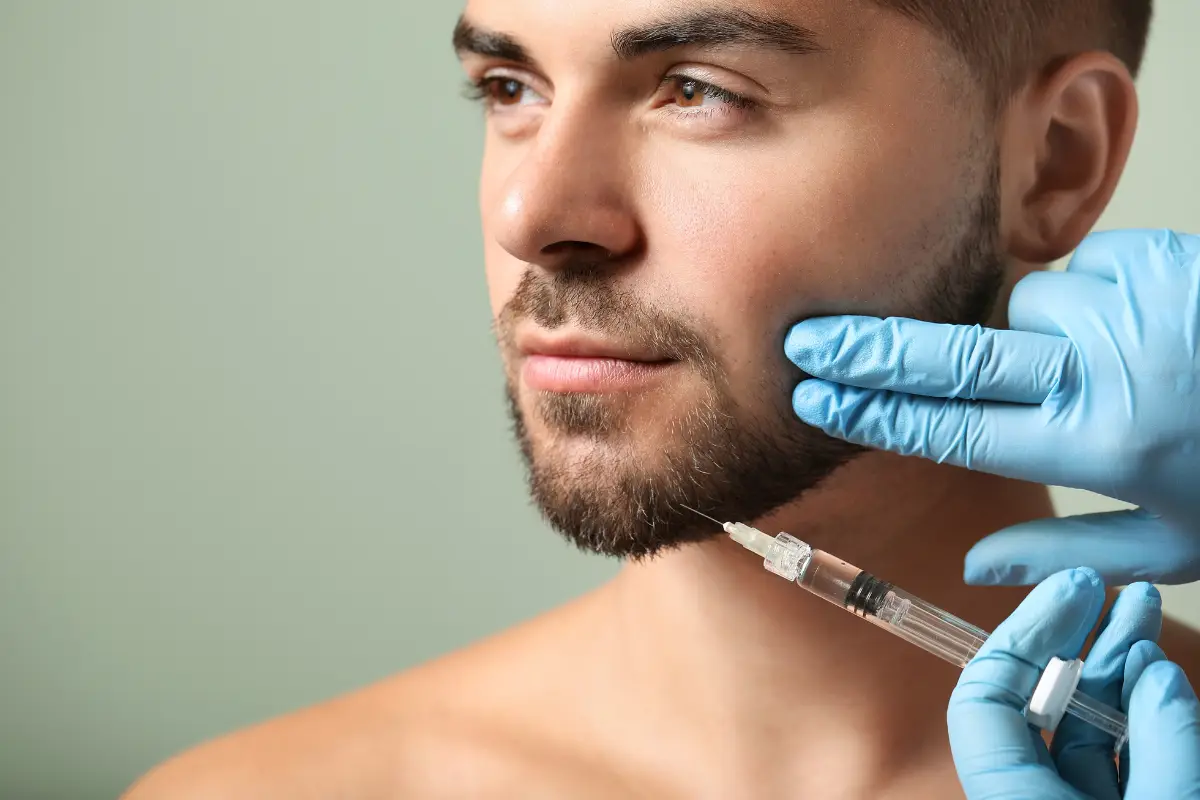
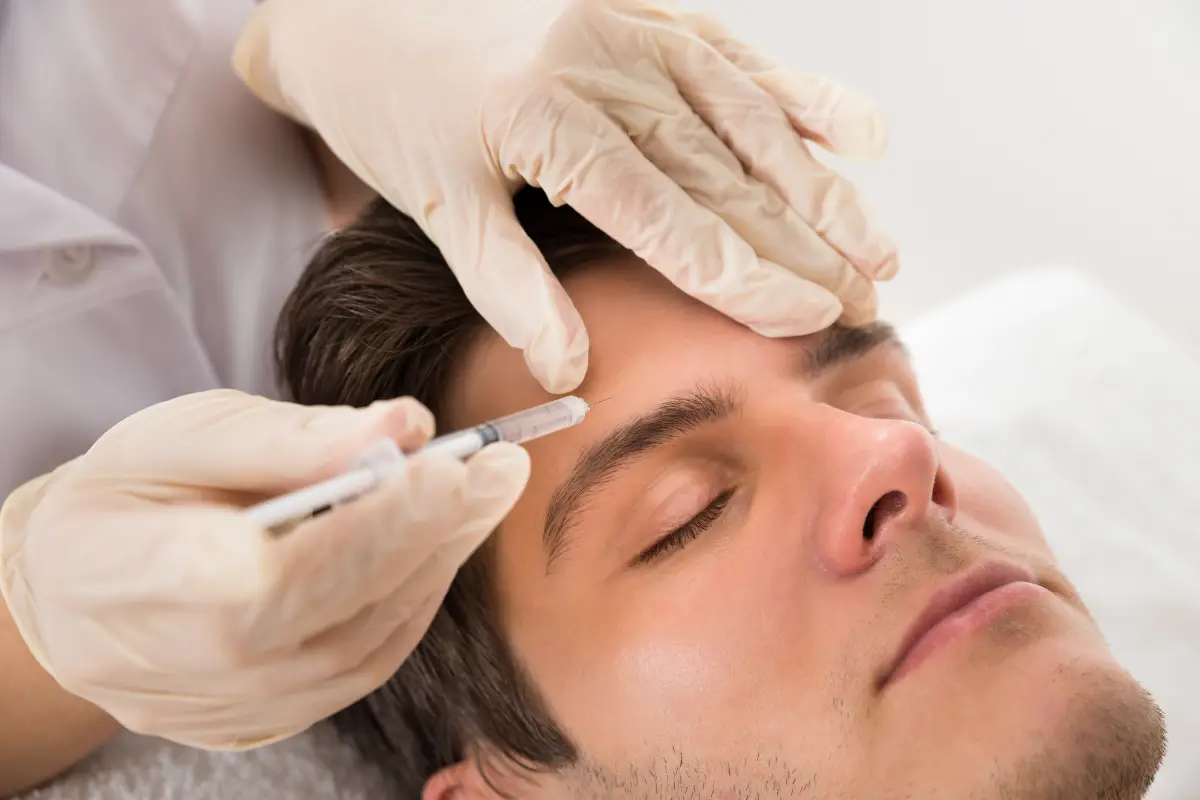
Strategic use of fillers and neuromodulators to create lifting effects:
•Procedure: Combination of dermal fillers and Botox in specific patterns
•Best For: Early signs of ageing, volume loss, and dynamic wrinkles
•Results Duration: 6-18 months depending on products used
•Downtime: Minimal, typically just 1-2 days of potential mild swelling
•Limitations: Cannot address true skin laxity or significant structural descent
Energy-Based Treatments: The Technology Option
Various devices that use energy to tighten skin and stimulate collagen:
•Options: Ultherapy, Thermage, Morpheus8, EndoDefine Laser
•Best For: Mild laxity and skin quality concerns
•Results Timeline: Gradual improvement over 3-6 months
•Sessions Required: Often multiple treatments for optimal results
•Limitations: Cannot address significant tissue descent or excess skin
Comparison to Surgical Facelift
Understanding how these alternatives compare to surgery helps in decision-making:
| Factor | Surgical Facelift | Non-Surgical Alternatives |
| Results | Significant, comprehensive improvement | Mild to moderate improvement |
| Longevity | 8-15 years depending on technique | 1-3 years typically |
| Downtime | 2-3 weeks social downtime | 0-3 days typically |
| Addressing Excess Skin | Effectively removes and redrapes | Cannot address significant excess |
| Cost Over Time | Higher initial investment, potentially more economical long-term | Lower initial cost, higher cumulative cost with maintenance |
| Risk Profile | Higher risk but established safety record | Lower risk with proper provider selection |
Frequently Asked Questions About Male Facelifts
Will a facelift make me look feminine or “done”?
When performed with a male-specific approach, a facelift should enhance your masculine features rather than feminise them. The key differences in male facelift techniques include preservation of stronger angles, appropriate positioning of tissues to maintain masculine contours, and careful attention to hairline and beard growth patterns. At DR Q Luxe Skin, we understand the distinct characteristics of male facial anatomy and aesthetics, ensuring results that look natural and appropriately masculine. The “done” appearance typically results from outdated techniques that pull tissues too tightly or in unnatural directions. Modern male facelift approaches focus on repositioning deeper tissues for natural-looking rejuvenation rather than simply pulling skin tight.
How long will my facelift results last?
For most male patients, facelift results last approximately 8-12 years, though this varies based on the specific technique used and individual factors. Deep plane facelifts typically provide the longest-lasting results (10-15 years), while mini-lifts may last 5-8 years. Factors that influence longevity include your skin quality, lifestyle habits (smoking, sun exposure, etc.), genetics, and ongoing skincare. It’s important to understand that while a facelift turns back the clock, it doesn’t stop the ageing process. You will continue to age, but from a more youthful starting point. Many men choose to maintain their results with less invasive treatments in the years following surgery.
What is the best age for a man to consider a facelift?
There is no single “best age” for a male facelift, as the timing depends on your individual ageing pattern, concerns, and goals rather than chronological age. Most male facelift patients at DR Q Luxe Skin are between 45-70 years old, with the average being around 55. The ideal timing is when non-surgical options no longer provide satisfactory results for your concerns, but before extreme laxity develops. Men with significant sun exposure history, weight fluctuations, or genetic predisposition to early ageing may consider treatment earlier, while others with good skin elasticity and bone structure may not need intervention until their 60s or beyond.
How visible will my scars be, especially with short hair?
Scar visibility is a particular concern for men, especially those with short hairstyles. Modern male facelift techniques use strategically placed incisions that follow natural creases and hairlines to maximise concealment. For men with short hair, special attention is paid to the temporal incisions, often placing them slightly deeper within the hairline or in natural creases. Behind the ear, incisions follow natural folds where they remain well-concealed. With proper surgical technique and scar management, most men find their scars become barely noticeable within 6-12 months. During your consultation at DR Q Luxe Skin, we’ll discuss your specific hairstyle and concerns, demonstrating exactly where your incisions would be placed.
How long before I can return to work and social activities?
Most male patients can return to non-strenuous work within 2-3 weeks after a full facelift, though this varies based on the extent of your procedure and your comfort with being seen during the later stages of recovery. Many professional men schedule their procedures before planned holidays or arrange to work from home during the initial recovery period. Social presentability typically occurs around the 3-4 week mark, though subtle swelling may persist longer. Strenuous activities, including heavy exercise, should be avoided for 4-6 weeks. During your consultation, we can discuss your specific work and social requirements to help you plan the optimal timing for your procedure.
Conclusion: The Future of Male Facial Rejuvenation
As attitudes shift, more men are asking about facial rejuvenation, usually after a photograph or a video call shows them a jawline they did not expect. The male facelift, when performed with appropriate techniques that respect masculine anatomy and aesthetic ideals, offers a sophisticated solution for men seeking natural-looking rejuvenation.
In Glasgow’s competitive professional environment, where appearance increasingly influences perception in both business and social contexts, the ability to present a refreshed, energetic appearance can provide tangible benefits. What decides the result is the choice of procedure, the timing, and above all a surgeon who operates on male faces often enough to know where a scar can and cannot be hidden.
At DR Q Luxe Skin in Glasgow, our approach to male facelifts emphasises natural-looking results that enhance rather than alter your appearance. Dr Q’s expertise in male facial anatomy and advanced surgical techniques ensures outcomes that maintain appropriate masculinity while addressing the specific concerns that bring men to consider facial rejuvenation.
If you are weighing this up, book a consultation and we will tell you plainly whether a facelift is the right answer for your face or whether something smaller would do.
Book your male facelift consultation with DR Q, Luxe Skin, Glasgow’s leading aesthetic clinic for men.
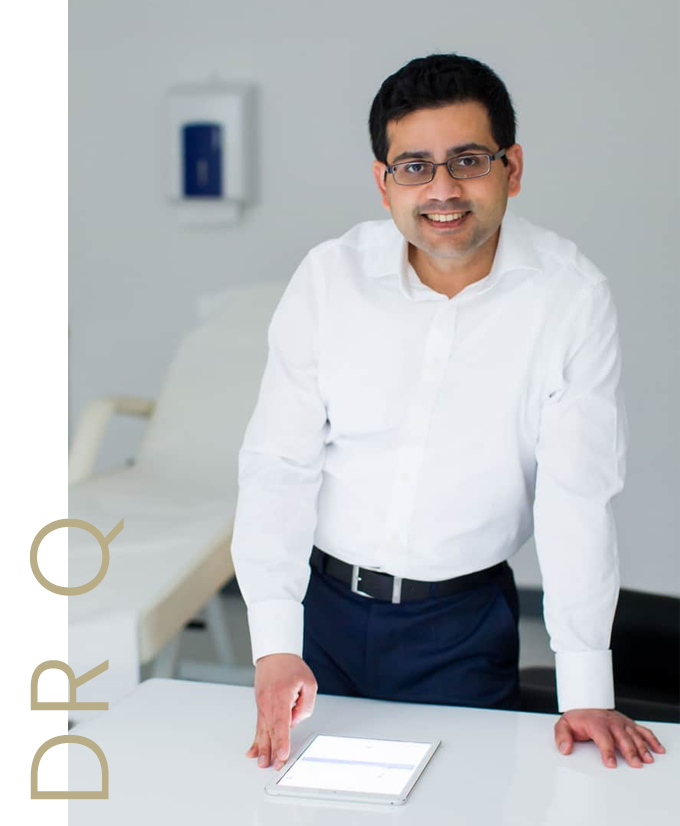
Dr Usman Qureshi (Dr Q) is a leading expert in aesthetic medicine with a 22 year career and a background spanning general practice, including A&E, and 12 years specialising in cosmetic procedures. A University of Glasgow graduate of 2002, he is the innovator behind the signature Q Lift, has performed over 20,000 procedures, and is an international speaker and trainer whose work has featured in Glamour and Harpers Bazaar.