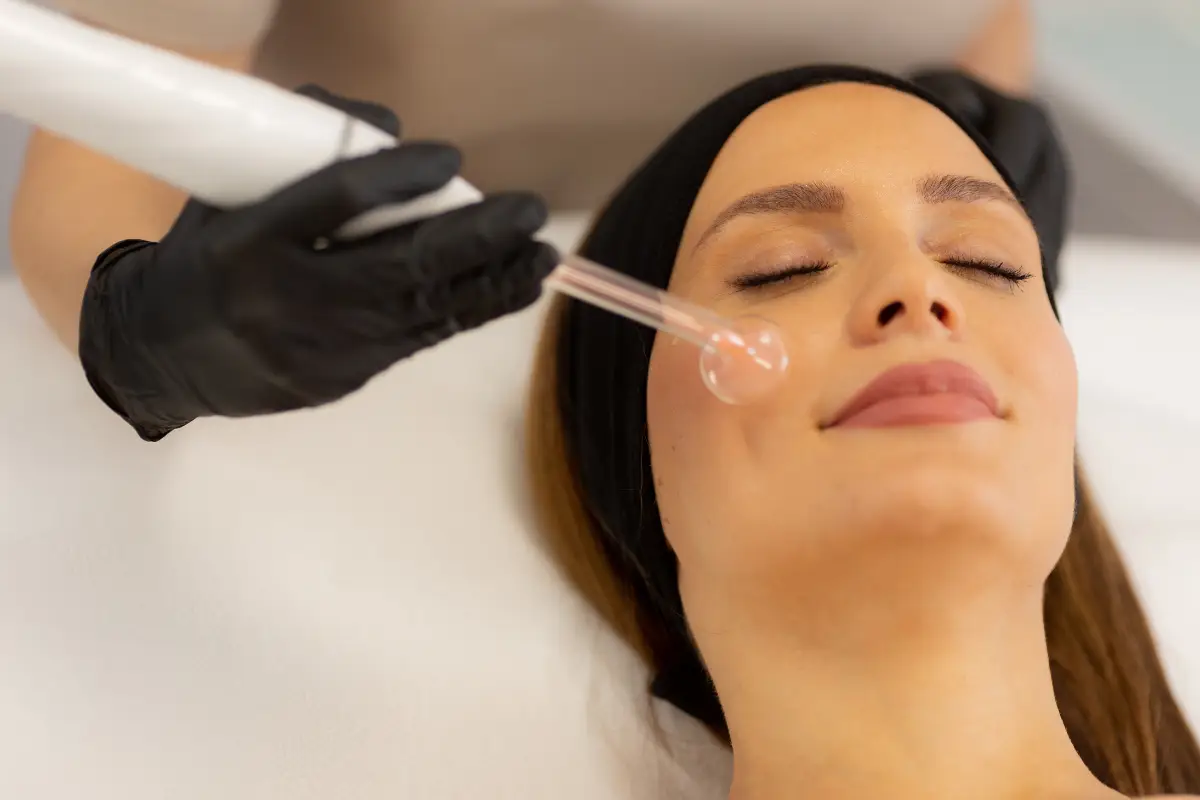
In the quest for youthful, firm skin, technological innovations continue to transform what’s possible without surgery. Among these advancements, Zaffiro skin tightening has emerged as a revolutionary approach that delivers impressive results through its unique combination of infrared light technology and gentle mechanical exfoliation. For Glasgow residents seeking effective skin tightening solutions, understanding the science behind this treatment can help you make informed decisions about your aesthetic journey.
This comprehensive guide explores the fascinating science of Zaffiro’s infrared technology, explaining how it works at the molecular level to transform collagen structures and deliver visible skin tightening results. Whether you’re concerned about facial sagging, neck laxity, or body skin tightening, understanding the mechanisms behind this advanced treatment will help you appreciate its potential benefits and limitations.
Understanding Collagen: The Foundation of Skin Structure
Before delving into how Zaffiro works, it’s essential to understand collagen, the protein that gives your skin its structure and firmness.
The Role of Collagen in Skin Health
Collagen is the most abundant protein in the human body, making up approximately 75-80% of your skin. This remarkable protein serves several critical functions:
1.Structural support, Providing the framework that gives skin its firmness
2.Elasticity maintenance, Working with elastin to allow skin to stretch and return to position
3.Wound healing, Facilitating repair of damaged skin tissues
4.Cellular communication, Supporting interactions between different cell types
5.Moisture retention, Helping maintain skin hydration levels
Collagen Structure and Types
At the molecular level, collagen has a unique triple-helix structure, resembling a three-stranded rope. This configuration gives collagen its remarkable tensile strength, greater than steel when compared weight for weight.
The skin contains multiple collagen types, each with specific functions:
| Collagen Type | Primary Location | Function |
| Type I | Dermis (80-90% of skin collagen) | Provides tensile strength and structural support |
| Type III | Dermis (8-12% of skin collagen) | Supports skin elasticity and healing |
| Type IV | Basement membrane | Forms the foundation between dermis and epidermis |
| Type VII | Dermal-epidermal junction | Anchors the epidermis to the dermis |
| Type XVII | Hemidesmosomes | Connects epidermal cells to the basement membrane |
The Ageing Process and Collagen Degradation
As we age, our skin undergoes significant changes in its collagen structure and production:
•Decreased production, Collagen synthesis declines approximately 1-1.5% per year after age 20
•Structural changes, Collagen fibrils become thicker and less organised
•Cross-linking alterations, Changes in how collagen molecules connect to each other
•Enzymatic breakdown, Increased activity of collagen-degrading enzymes
•Glycation, Sugar molecules attach to collagen, forming advanced glycation end products (AGEs)
These changes manifest visibly as:
•Skin laxity and sagging
•Formation of wrinkles and fine lines
•Reduced skin elasticity and resilience
•Thinning of the dermal layer
External factors that accelerate collagen degradation include:
•UV radiation exposure (particularly relevant in Glasgow’s changing climate)
•Pollution (an urban concern for Glasgow residents)
•Smoking and alcohol consumption
•Poor nutrition
•Chronic stress
Zaffiro Technology: The Science of Infrared Skin Tightening
Zaffiro represents a significant advancement in non-surgical skin tightening, using a unique combination of infrared light technology and mechanical exfoliation to transform skin structure.
The Dual-Action Approach
What sets Zaffiro apart from other skin tightening technologies is its two-phase treatment protocol:
Phase 1: Sapphire Contact Cooling and Exfoliation
The first phase involves a sapphire crystal handpiece that:
•Gently exfoliates the skin surface, removing dead skin cells
•Prepares the skin for optimal infrared light penetration
•Provides continuous cooling to protect the epidermis
•Creates a smooth optical interface for the infrared light
Phase 2: Targeted Infrared Light Delivery
The second phase delivers infrared light energy that:
•Penetrates to precise depths within the dermis (1-4mm)
•Targets water molecules within collagen structures
•Creates controlled thermal effects at specific temperatures
•Initiates immediate and progressive collagen transformation
The Physics of Infrared Light in Skin Tightening
Zaffiro utilises infrared light in the 850-1350nm wavelength range, which has specific properties that make it ideal for collagen remodelling:
1.Optimal penetration depth, This wavelength range penetrates beyond the epidermis into the dermis where collagen resides
2.Water absorption, Infrared light is preferentially absorbed by water molecules within collagen structures
3.Selective thermolysis, Creates precise heating without damaging surrounding tissues
4.Volumetric heating, Generates heat throughout a three-dimensional space rather than just at the surface
The Critical Temperature Threshold
The science of Zaffiro centres around achieving a specific temperature range within the dermis:
•Target temperature: 60-65°C (140-149°F)
•Duration: Maintained for milliseconds
•Depth: Controlled at 1-4mm beneath the skin surface
This precise temperature control is crucial because:
•Below 60°C: Insufficient for collagen contraction
•60-65°C: Optimal for collagen transformation without tissue damage
•Above 65°C: Risk of excessive thermal injury and scarring
The Three-Phase Collagen Transformation Process
When Zaffiro’s infrared technology reaches the critical temperature threshold within the dermis, it initiates a three-phase collagen transformation process.
Phase 1: Immediate Collagen Contraction (Days 0-7)
The first response occurs during and immediately after treatment:
The Science: When collagen fibres are heated to 60-65°C, the heat disrupts the hydrogen bonds that maintain the triple-helix structure. This causes the collagen molecules to partially unwind and contract along their longitudinal axis, creating an immediate tightening effect.
Research Evidence: Studies using electron microscopy have demonstrated that collagen fibres can contract by up to 30% of their original length when exposed to this specific temperature range.
Clinical Manifestation: Patients often notice an immediate mild tightening effect after the first treatment, though this initial contraction represents only about 20-30% of the eventual result.
Phase 2: Inflammatory Response and Neocollagenesis (Weeks 1-8)
The second phase involves the body’s healing response to the controlled thermal injury:
The Science: The controlled heating triggers an inflammatory cascade that activates fibroblasts, the cells responsible for collagen production. These activated fibroblasts increase their synthesis of new collagen (primarily Types I and III), elastin, and hyaluronic acid.
Cellular Mechanisms:
1.Heat shock proteins are released, signalling cellular repair mechanisms
2.Growth factors including TGF-β (Transforming Growth Factor Beta) are upregulated
3.Fibroblasts migrate to the treatment area and become more metabolically active
4.Production of procollagen (the precursor to collagen) increases significantly
5.Matrix metalloproteinases (MMPs) help remodel the extracellular matrix
Clinical Manifestation: During this phase, patients experience progressive improvement in skin tightness, texture, and tone. This improvement continues over several weeks as new collagen forms and integrates into the existing dermal structure.
Phase 3: Collagen Remodelling and Maturation (Months 2-6)
The final phase involves the long-term reorganisation of the newly formed collagen:
The Science: Over several months, the newly synthesised collagen undergoes cross-linking and realignment along tension lines. This process strengthens the collagen network and enhances its structural integrity. Additionally, the ratio of Type III collagen (more prevalent in younger skin) increases relative to Type I collagen.
Biochemical Processes:
•Lysyl oxidase enzymes facilitate cross-linking between collagen molecules
•Collagen fibrils organise into larger collagen fibres
•The extracellular matrix becomes more ordered and structured
•Water-binding capacity of the dermis improves
Clinical Manifestation: During this phase, results continue to improve and stabilise. The skin appears firmer, more elastic, and has a more youthful texture and appearance. The full results of Zaffiro treatment typically become apparent 3-6 months after the final session.
Comparing Zaffiro to Other Skin Tightening Technologies
To understand Zaffiro’s unique position in the aesthetic landscape, it’s helpful to compare it with other skin tightening technologies available in Glasgow.
Radiofrequency vs. Infrared Technology
| Feature | Zaffiro (Infrared) | Traditional Radiofrequency |
| Energy Type | Infrared light (850-1350nm) | Electromagnetic waves (0.3-10MHz) |
| Depth of Penetration | Precisely controlled 1-4mm | Variable depending on device (0.5-3mm) |
| Heating Pattern | Volumetric heating with precise depth control | Electrical resistance heating with less precise depth control |
| Temperature Control | Highly precise with sapphire cooling | Varies by device; some with less precise control |
| Treatment Comfort | Enhanced comfort due to sapphire cooling | Variable comfort; some devices require more aggressive heating |
| Treatment Time | Typically 30-45 minutes for full face | Often 45-60 minutes for full face |
| Sessions Required | 3-4 sessions recommended | 4-6 sessions typically recommended |
Laser Skin Tightening vs. Zaffiro
| Feature | Zaffiro | Ablative Lasers | Non-Ablative Lasers |
| Mechanism | Infrared heating with exfoliation | Vaporisation of tissue | Dermal heating without surface damage |
| Epidermal Impact | Minimal with sapphire protection | Significant removal of epidermis | Minimal to moderate |
| Downtime | Minimal (0-24 hours) | Significant (7-14 days) | Mild (1-3 days) |
| Pain Level | Mild to moderate | Moderate to high | Mild to moderate |
| Risk Profile | Low risk of complications | Higher risk of pigmentation issues | Low to moderate risk |
| Results Timeline | Progressive over 2-6 months | More immediate but with recovery period | Progressive over 2-4 months |
| Suitability for Glasgow Climate | Well-suited year-round | Better in autumn/winter due to sun sensitivity | Moderate year-round suitability |
Ultrasound-Based Treatments vs. Zaffiro
| Feature | Zaffiro | Ultrasound Treatments (e.g., Ultherapy) |
| Energy Type | Infrared light | Focused ultrasound |
| Depth Targeting | Broad dermal targeting (1-4mm) | Precise focal points at specific depths (1.5-4.5mm) |
| Treatment Sensation | Warm sensation with cooling comfort | Often more uncomfortable with sharp sensations |
| Treatment Areas | Versatile for face and body | Primarily face and upper neck |
| Treatment Time | 30-45 minutes for full face | 60-90 minutes for full face |
| Cost in Glasgow | £150-£300 per session | £500-£2,500 per session |
| Results Onset | Some immediate effect with progressive improvement | Purely progressive with minimal immediate effect |
The Zaffiro Treatment Experience at DR Q Luxe Skin
Understanding what to expect during a Zaffiro treatment helps patients prepare appropriately and optimises their experience and results.
Pre-Treatment Consultation
Every Zaffiro journey at DR Q Luxe Skin begins with a comprehensive consultation that includes:
•Detailed skin assessment using advanced imaging technology
•Discussion of concerns and expectations
•Review of medical history to ensure suitability
•Customised treatment planning based on individual needs
•Before photos for objective comparison
The Treatment Process
The Zaffiro procedure itself involves several carefully executed steps:
1.Skin cleansing, Thorough removal of makeup, oils, and surface debris
2.Skin analysis, Final assessment of skin condition and treatment areas
3.First pass: Exfoliation, Gentle mechanical exfoliation with the sapphire crystal
4.Second pass: Infrared delivery, Systematic application of infrared energy
5.Temperature monitoring, Continuous monitoring of skin temperature
6.Comfort management, Ongoing assessment of patient comfort
7.Final cooling, Completion with cooling application
The entire procedure typically takes 30-45 minutes for a full facial treatment, with body areas requiring additional time based on size.
Immediate Post-Treatment Experience
Immediately after treatment, patients typically experience:
•Mild to moderate redness lasting 1-4 hours
•Warm sensation in treated areas
•Immediate mild tightening effect
•Refreshed appearance from the exfoliation component
Recovery and Aftercare
One of the significant advantages of Zaffiro is its minimal downtime:
•Return to normal activities immediately
•Makeup application permitted after 24 hours
•Sun protection essential (particularly important in Glasgow even on cloudy days)
•Hydration focus both topically and internally
•Gentle skincare for 48-72 hours post-treatment
Recommended Treatment Protocol
For optimal results, we typically recommend:
•Initial series: 3-4 treatments spaced 3-4 weeks apart
•Maintenance: Single treatments every 6-12 months
•Complementary treatments: Often combined with other modalities for enhanced results
Optimising Results: Factors That Influence Zaffiro Effectiveness
Several factors can significantly impact the results achieved with Zaffiro treatments.
Patient-Related Factors
Age and Collagen Status
The state of your existing collagen affects treatment outcomes:
•Younger patients (30s-40s) with good collagen quality typically see excellent preventative and early intervention results
•Middle-aged patients (40s-50s) often experience significant improvement with moderate laxity
•Older patients (60+) may require more sessions and combination approaches for optimal results
Skin Type and Thickness
Skin characteristics influence treatment parameters and outcomes:
•Thin skin requires more conservative settings but often shows visible improvement
•Thick skin may require more aggressive treatment but typically responds well
•Fitzpatrick skin types I-IV respond similarly
•Fitzpatrick types V-VI require specialised protocols to prevent pigmentation issues
Lifestyle Factors
Daily habits significantly impact both immediate results and long-term maintenance:
•Sun exposure, UV radiation can counteract treatment benefits
•Smoking, Significantly impairs collagen production and quality
•Nutrition, Protein intake and antioxidants support collagen synthesis
•Hydration, Well-hydrated skin responds better to treatment
•Sleep quality, Affects cellular repair and regeneration
Treatment-Related Factors
Technology Application
How the technology is applied significantly impacts results:
•Treatment temperature, Must reach the critical 60-65°C threshold
•Treatment coverage, Comprehensive application without gaps
•Pass technique, Proper overlapping and systematic approach
•Energy settings, Customised to individual skin characteristics
Treatment Frequency and Intervals
The timing and frequency of treatments affect collagen remodelling:
•Optimal interval, 3-4 weeks allows for initial healing while maintaining momentum
•Complete series, Full recommended course is essential for cumulative effects
•Maintenance timing, Scheduling maintenance before significant regression occurs
Combination Approaches
Zaffiro often produces enhanced results when combined with complementary treatments:
•Botox, Reduces dynamic wrinkles while Zaffiro addresses skin quality
•Fillers, Restore volume while Zaffiro improves skin tightness
•Morpheus8, Provides deeper remodelling that complements Zaffiro’s effects
•Medical-grade skincare, Supports and extends treatment results
Three Typical Zaffiro Treatment Plans
Zaffiro is planned as a course rather than a single session. These three plans show how the protocol changes with the concern being treated.
Plan One: Mild to Moderate Laxity in the Lower Face and Neck
For mild to moderate skin laxity concentrated in the lower face and neck.
Treatment Protocol:
•4 Zaffiro treatments at 3-week intervals
•Complementary skincare regimen
•Maintenance treatment at 8 months
What the plan aims to achieve:
•Visible improvement in skin tightness, particularly along the jawline
•Enhanced skin texture and tone
•Reduction in fine lines
•Natural-looking results without surgery
Plan Two: Horizontal Neck Lines and Early Laxity
For early neck ageing, where the visible signs are horizontal lines and the beginning of laxity.
Treatment Protocol:
•3 Zaffiro treatments at 4-week intervals
•Focus on anterior and lateral neck
•Combined with targeted Botox for platysmal bands
What the plan aims to achieve:
•Significant improvement in horizontal neck lines
•Enhanced skin quality and texture
•More defined neck-jaw junction
•Maintenance reviewed at around 10 to 12 months
The exfoliation element of Zaffiro changes the surface appearance straight away, while the tightening develops over the weeks following the second and third sessions. Combining it with a small amount of Botox for the platysmal bands is common where those bands are contributing to the appearance.
Plan Three: Preventative Treatment Before Laxity Sets In
For early signs of laxity, where the aim is to maintain skin quality rather than to correct an established change.
Treatment Protocol:
•3 Zaffiro treatments at 4-week intervals
•Full face approach with emphasis on lower face
•Maintenance plan of single treatments every 8-12 months
What the plan aims to achieve:
•Improved skin firmness and resilience
•Enhanced overall skin quality and luminosity
•Prevention of further laxity development
•Natural-looking refreshed appearance
Frequently Asked Questions About Zaffiro Skin Tightening
How many Zaffiro treatments will I need?
Most patients require 3-4 treatments spaced 3-4 weeks apart for optimal results. This protocol allows for progressive collagen remodelling while maintaining treatment momentum. Following the initial series, maintenance treatments are typically recommended every 6-12 months to sustain and enhance results. Your specific treatment plan will be customised based on your age, skin condition, and aesthetic goals during your consultation at DR Q Luxe Skin.
Is Zaffiro treatment painful?
Most patients describe Zaffiro as comfortable to moderately uncomfortable rather than painful. The sensation is typically characterised as intense warmth or heat that peaks briefly during energy delivery. The sapphire cooling technology significantly enhances comfort compared to older infrared technologies. On a scale of 1-10, most Glasgow patients rate the discomfort level between 3-5. Particularly sensitive areas such as the forehead or around the eyes may feel more intense, but the practitioner can adjust settings for comfort while maintaining effectiveness.
How soon will I see results from Zaffiro treatment?
Zaffiro results develop in three phases. Many patients notice an immediate mild tightening effect and improved skin appearance from the exfoliation component. However, the more significant results develop progressively over time: noticeable improvement typically begins 2-4 weeks after the first treatment, with continued enhancement after each subsequent session. The full results become apparent approximately 3-6 months after completing the recommended treatment series, as the collagen remodelling process reaches maturation.
How does Zaffiro compare to a surgical facelift?
While Zaffiro provides impressive non-surgical skin tightening, it cannot replicate the dramatic results of a surgical facelift. Zaffiro is ideal for patients with mild to moderate skin laxity who want natural-looking improvement without surgery, downtime, or scarring. It works by improving skin quality and creating moderate tightening through collagen remodelling, whereas a facelift surgically repositions deeper facial tissues and removes excess skin. For many patients in their 30s-50s with early to moderate signs of ageing, Zaffiro offers an excellent alternative or complement to surgery, or it can help maintain surgical results for those who have previously had a facelift.
Is Zaffiro safe for all skin types?
Zaffiro is generally safe for most skin types, including Fitzpatrick types I-IV. For darker skin tones (Fitzpatrick V-VI), treatment is possible but requires modified protocols and settings to minimise the risk of post-inflammatory hyperpigmentation. The sapphire cooling technology helps protect the epidermis, making Zaffiro safer for a wider range of skin types compared to some other heat-based technologies. During your consultation at DR Q Luxe Skin, we’ll assess your skin type and condition to determine if Zaffiro is appropriate for you or if another technology might better suit your needs.
Conclusion: The Future of Non-Surgical Skin Tightening
Zaffiro represents a significant advancement in non-surgical skin tightening technology, offering Glasgow patients access to effective treatment with minimal downtime. By harnessing the power of precisely controlled infrared energy and understanding the science of collagen transformation, this innovative approach delivers natural-looking rejuvenation for face and body concerns.
The three-phase collagen transformation process, immediate contraction, neocollagenesis, and long-term remodelling, provides both immediate satisfaction and progressive improvement that continues for months after treatment. This science-based approach to skin tightening aligns perfectly with the growing demand for effective non-surgical options that work with the body’s natural processes.
At DR Q Luxe Skin in Glasgow, we’re committed to providing our patients with the most advanced, effective, and safe treatment options available. Zaffiro exemplifies this commitment, delivering impressive skin tightening results with minimal discomfort and downtime.
If you’re concerned about skin laxity or looking for preventative measures against the signs of ageing, we invite you to schedule a consultation with Dr Q to discuss whether Zaffiro might be right for you.
Book your Zaffiro consultation with DR Q Luxe Skin, Glasgow’s leading aesthetic clinic.
Luxe Skin, Aesthetic Clinic by Doctor Q
227 Ingram St, Glasgow G1 1DA, United Kingdom
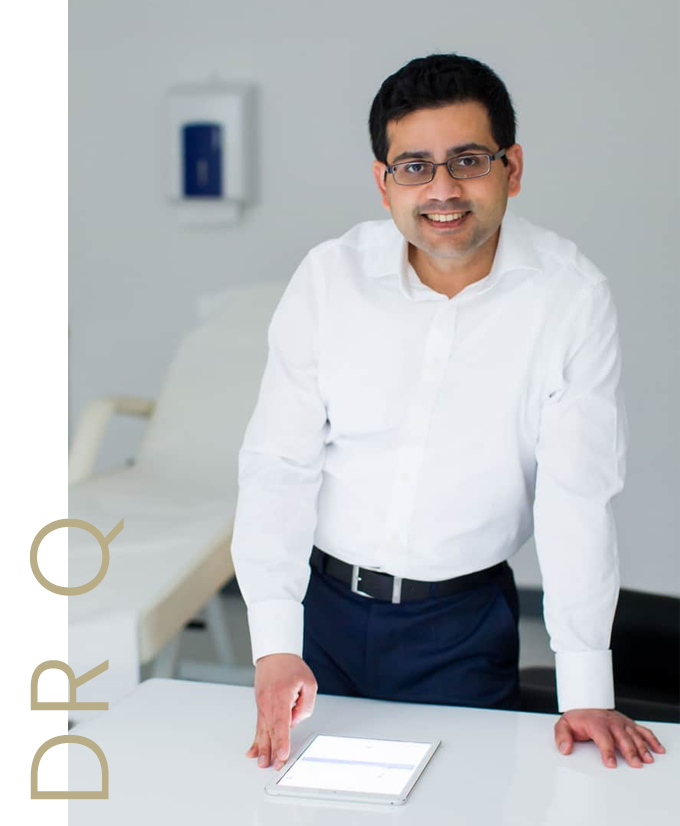
Dr Usman Qureshi (Dr Q) is a leading expert in aesthetic medicine with a 22 year career and a background spanning general practice, including A&E, and 12 years specialising in cosmetic procedures. A University of Glasgow graduate of 2002, he is the innovator behind the signature Q Lift, has performed over 20,000 procedures, and is an international speaker and trainer whose work has featured in Glamour and Harpers Bazaar.