Excessive sweating is one of those problems people manage quietly for years. Dark shirts only. A spare top in the bag. Choosing where to sit in a meeting based on how warm the room is. It is common, it is a recognised medical condition, and it responds well to treatment that most people do not realise exists.
This guide explains how botulinum toxin, better known as Botox, is used for hyperhidrosis: how it works, which areas it can treat, what the appointment involves, how long it lasts and how it compares with the alternatives. Luxe Skin by Dr Q is an aesthetic clinic on Ingram Street in Glasgow led by Dr Usman Qureshi, where Botox is used medically for excessive sweating as well as cosmetically for lines and wrinkles.
Quick answer: Botox treats excessive sweating by blocking the nerve signal that tells sweat glands to activate. A series of very small injections is placed across the affected area, most commonly the underarms, and sweating in that area reduces substantially within a few days to two weeks. The effect is temporary and typically lasts several months, often in the region of four to six, before the treatment is repeated. It does not affect sweating elsewhere on the body, so normal temperature regulation continues.
In this guide
- What is hyperhidrosis?
- Does Botox stop excessive sweating?
- How botulinum toxin switches off a sweat gland
- Which areas can be treated
- What the treatment involves
- How long does it last, and when to book
- Does it hurt?
- Aftercare and what to expect
- Who it suits, and who should see a GP first
- How it compares with other options
- What to ask at your consultation
- Frequently asked questions
What is hyperhidrosis?
Hyperhidrosis is the medical term for sweating that goes well beyond what the body needs for cooling. It is not about being unfit, overweight or anxious, although anxiety about the sweating itself often becomes part of the cycle. The sweat glands are simply overactive, firing when there is no physiological reason for them to.
Definition: hyperhidrosis is excessive sweating that is not triggered by heat or exercise. Primary hyperhidrosis usually begins in adolescence or early adulthood, affects specific areas symmetrically such as both underarms or both palms, and has no underlying medical cause. Secondary hyperhidrosis begins later, is more likely to affect the whole body or occur at night, and is caused by something else such as a medication, a hormonal change or an underlying condition.
The distinction matters because it changes what you should do next. Primary hyperhidrosis is a candidate for treatment straight away. Secondary hyperhidrosis needs the underlying cause looked at first, which is a conversation with your GP rather than an aesthetic clinic.
The impact is rarely medical and almost always practical: clothing choices, hand shaking, holding a phone, gripping a steering wheel, giving a presentation. The NHS describes excessive sweating as a common problem, and it lists botulinum toxin injections among the options when antiperspirants and first line measures have not been enough.
Does Botox stop excessive sweating?
In the treated area, it substantially reduces it. Botulinum toxin is one of the more predictable treatments in this space precisely because it works on the mechanism rather than on the symptom: instead of trying to block sweat as it reaches the surface, it stops the gland being switched on in the first place.
What it does not do is cure hyperhidrosis. The nerve endings recover over time and sweating gradually returns, which is why the treatment is repeated. It also does not affect sweating anywhere other than where it was injected, so the body continues to regulate its temperature normally through every untreated area.
How botulinum toxin switches off a sweat gland
Sweat glands are controlled by nerves that release a chemical messenger called acetylcholine. When that messenger reaches the gland, the gland produces sweat. Botulinum toxin blocks its release at the nerve ending, so the message never arrives and the gland stays quiet.
- Very small amounts of product are placed just under the skin, across a grid covering the affected area.
- The toxin binds to the nerve endings that supply the sweat glands in that immediate area.
- Release of acetylcholine at those endings is blocked, so the glands are not stimulated.
- Over the following months the nerve endings gradually recover and sweating returns, at which point treatment can be repeated.
It is the same mechanism used cosmetically for lines and wrinkles, applied to a different target. If you want the cosmetic side explained in full, our complete guide to Botox and the Botox in Glasgow treatment page both cover it.
Which areas can be treated
Botulinum toxin is used for excessive sweating in several parts of the body, and the experience differs by area.
| Area | How it is usually approached | What patients notice |
|---|---|---|
| Underarms | The most commonly treated area, with injection points spaced in a grid across the sweating zone | Generally well tolerated, and the area most people are seeking help for |
| Palms of the hands | A more sensitive area, so comfort measures are normally planned in advance | Grip strength can feel slightly reduced for a short period in some people |
| Soles of the feet | Similar approach to the palms, across the sweating area | More sensitive than the underarm, and results can be a little less predictable |
| Face, forehead and scalp | Smaller doses placed carefully to avoid affecting nearby muscles | Requires precise placement, so anatomical knowledge matters most here |
Important: at Luxe Skin by Dr Q, Botox is used medically for excessive sweating when it is clinically indicated. Which areas are appropriate for you, and whether treatment is the right step at all, is decided at consultation with Dr Q rather than assumed in advance.
What the treatment involves
The appointment is straightforward and follows the same shape as any injectable treatment at the clinic.
- Consultation. Dr Q takes a history: when the sweating started, where it affects you, what you have already tried and whether anything suggests an underlying cause that should be checked first.
- Mapping. The treatment area is identified and marked. Some practitioners use a starch and iodine test, which stains the actively sweating skin so the grid can be planned precisely.
- Treatment. A series of small injections is placed across the mapped area with a very fine needle. Underarm treatment typically takes a few minutes per side.
- Afterwards. There is no downtime. You can return to your day immediately, with the effect building over the following days.
Sweating usually begins to reduce within two to four days, with the full effect settled by around two weeks. That timeline matters if you are treating ahead of a specific event.
How long does it last, and when to book
Treatment for excessive sweating tends to last longer than a cosmetic facial treatment. Many patients find the effect holds for several months, commonly in the region of four to six, though this varies with the area, the dose and the individual.
Because the effect takes up to two weeks to settle fully, timing is worth planning. If you are treating for a wedding, an interview, an exam period, a holiday or the warmest part of the year, book far enough ahead that the result is established rather than still developing.
Excessive sweating is one of the few aesthetic clinic treatments where patients describe the change as practical rather than cosmetic. It shows up in what they feel able to wear and how they sit in a room.
On treating hyperhidrosis at Luxe Skin by Dr Q
Does it hurt?
There are more injection points than a facial treatment because the area is larger, but each one is the same brief pinch with a very fine needle, over in about a second. The underarm is generally well tolerated by most patients.
The palms and soles are genuinely more sensitive, which is why comfort measures such as cooling are usually discussed in advance for those areas. If needles worry you, say so when you book rather than when you arrive, so the appointment can be given a little more time. Our guide to what Botox actually feels like covers this in detail.
Aftercare and what to expect
Aftercare is simple and largely mirrors the advice for any injectable treatment.
- Avoid rubbing or massaging the treated area for the rest of the day.
- Skip strenuous exercise, saunas and steam rooms for twenty four hours.
- Leave antiperspirant off the treated skin for the first day.
- Expect small raised bumps at the injection points that settle within about half an hour.
- Expect the effect to build over one to two weeks rather than appearing immediately.
Mild tenderness or minor bruising at the injection points is possible and settles quickly. Our Botox aftercare guide covers the general principles in more depth.
Who it suits, and who should see a GP first
Treatment tends to suit adults with localised, persistent sweating that has not responded to strong antiperspirants and is affecting daily life, work or clothing choices.
See your GP first if: the sweating started suddenly, happens mainly at night, affects your whole body rather than specific areas, or comes alongside weight loss, a raised temperature, a racing heartbeat or any other new symptom. Those patterns can point to an underlying cause that should be investigated before any aesthetic treatment. Tell your practitioner about all medication you take, including anything prescribed for sweating.
Botulinum toxin is not suitable for everyone. It is avoided in pregnancy and breastfeeding, in people with certain neuromuscular conditions and where there is an allergy to any component of the product. A proper medical consultation exists to establish exactly this, which is why every treatment at Luxe Skin begins with one.
How it compares with other options
Botulinum toxin sits in the middle of a range of options, and it is not always the first step.
| Option | How it works | Where it fits |
|---|---|---|
| Clinical strength antiperspirant | Aluminium salts temporarily plug the sweat duct at the skin surface | The usual first step, available without a prescription or from a GP |
| Iontophoresis | A weak electrical current passed through water reduces sweating, mainly on hands and feet | Effective for palms and soles but needs repeated sessions at home or in clinic |
| Botulinum toxin injections | Blocks the nerve signal that activates the sweat gland | Used when antiperspirants have not worked, or for a longer lasting result in a defined area |
| Oral medication | Reduces sweating throughout the body | Prescribed by a doctor, with body wide effects to weigh up |
| Surgery | Interrupts the nerves supplying the sweat glands | A last resort, considered only when other options have failed |
For many people the practical answer is a combination: a strong antiperspirant for everyday management and injections through the months or the situations where that is not enough.
What to ask at your consultation
- Is my pattern of sweating likely to be primary or secondary, and should anything be checked first?
- Which areas would you treat, and how many injection points would that involve?
- How long would you expect the result to last for me?
- What can I do to make the appointment more comfortable?
- When should I book relative to the event or season I am treating for?
- What happens if the result is uneven or wears off sooner than expected?
You can read about the doctor on the about Dr Q page, see the full range on the face and men’s treatments pages, or browse current treatment options on the price guide.
Key takeaways: hyperhidrosis is a recognised medical condition, not a hygiene problem. Botulinum toxin blocks the nerve signal that activates sweat glands in the treated area, with sweating reducing within days and the full effect settling by about two weeks. It commonly lasts in the region of four to six months. It does not affect sweating elsewhere on the body. Sudden onset, night sweats or whole body sweating should be seen by a GP before any aesthetic treatment.
Frequently asked questions
Does Botox stop excessive sweating?
In the treated area, largely yes. Botulinum toxin blocks the chemical signal that tells the sweat gland to produce sweat, so the gland stays inactive until the effect wears off. It does not cure hyperhidrosis and it does not affect sweating anywhere else on the body, which means normal temperature regulation continues as usual.
How long does Botox for sweating last?
Longer than a cosmetic facial treatment for most people. Many patients find the effect lasts several months, commonly in the region of four to six, before sweating gradually returns. Duration varies with the area treated, the dose used and the individual, and it is one of the things to discuss at consultation.
Which areas can be treated for excessive sweating?
Botulinum toxin is used most often for the underarms, and also for the palms, the soles and the face or scalp depending on where the problem is. At Luxe Skin by Dr Q in Glasgow, Botox is used medically for excessive sweating when it is clinically indicated, and Dr Q will confirm at consultation which areas are appropriate for you.
Is treatment for sweating painful?
It involves more injection points than a facial treatment because the area is larger, but each one is a brief pinch with a very fine needle. The underarm is generally well tolerated. The palms and soles are more sensitive, which is why comfort measures are usually discussed in advance for those areas.
Will I sweat more somewhere else instead?
Some people notice slightly more sweating elsewhere, often called compensatory sweating, and it is usually mild when only one area is treated. It is worth raising at consultation so your expectations are set properly before treatment.
Is excessive sweating a medical condition?
Yes. Hyperhidrosis is a recognised medical condition in which the body sweats far more than it needs to for temperature control. The NHS lists botulinum toxin injections among the treatment options when antiperspirants and first line measures have not worked.
When should I see my GP rather than a clinic?
If heavy sweating has started suddenly, happens mainly at night, affects your whole body rather than specific areas, or comes with weight loss, a raised temperature or a racing heartbeat, see your GP first. Those patterns can point to an underlying cause that needs investigating before any cosmetic or aesthetic treatment.
Who performs the treatment at Luxe Skin?
Dr Usman Qureshi, known as Dr Q, who graduated in Medicine from the University of Glasgow in 2002 and has more than twenty years of medical experience across general practice, emergency medicine and over a decade in cosmetic medicine. The clinic is at 227 Ingram Street in Glasgow city centre.
Tired of planning your wardrobe around it?
Book a consultation with Dr Q at the Ingram Street clinic in Glasgow to find out whether treatment for excessive sweating is right for you.
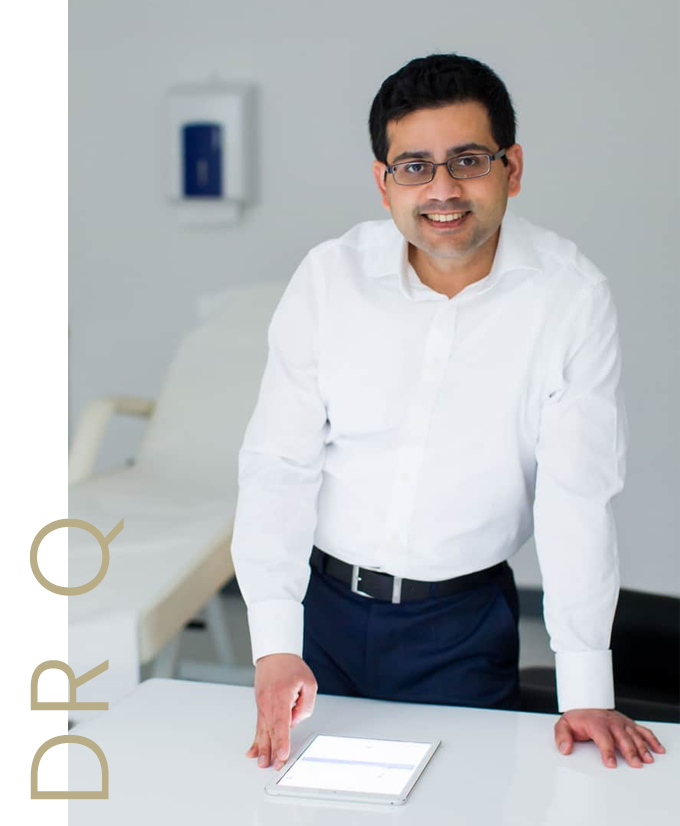
Dr Usman Qureshi (Dr Q) is a leading expert in aesthetic medicine with a 22 year career and a background spanning general practice, including A&E, and 12 years specialising in cosmetic procedures. A University of Glasgow graduate of 2002, he is the innovator behind the signature Q Lift, has performed over 20,000 procedures, and is an international speaker and trainer whose work has featured in Glamour and Harpers Bazaar.