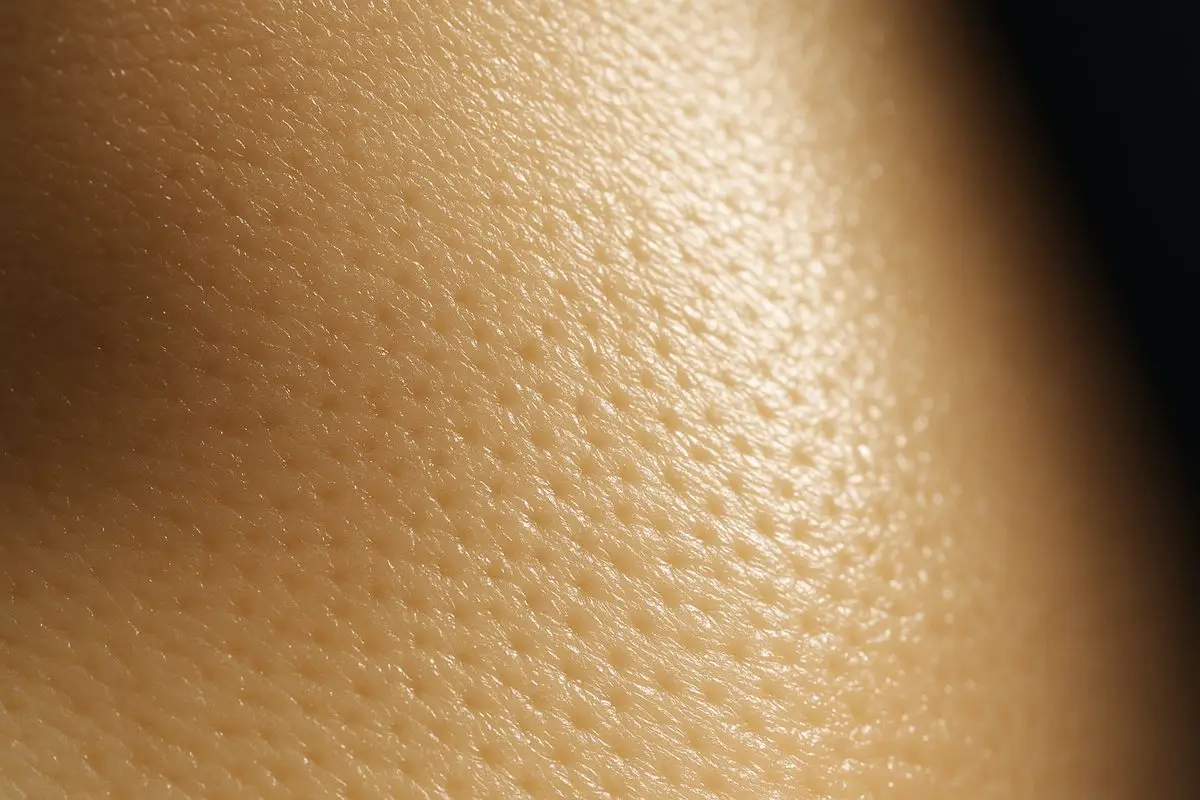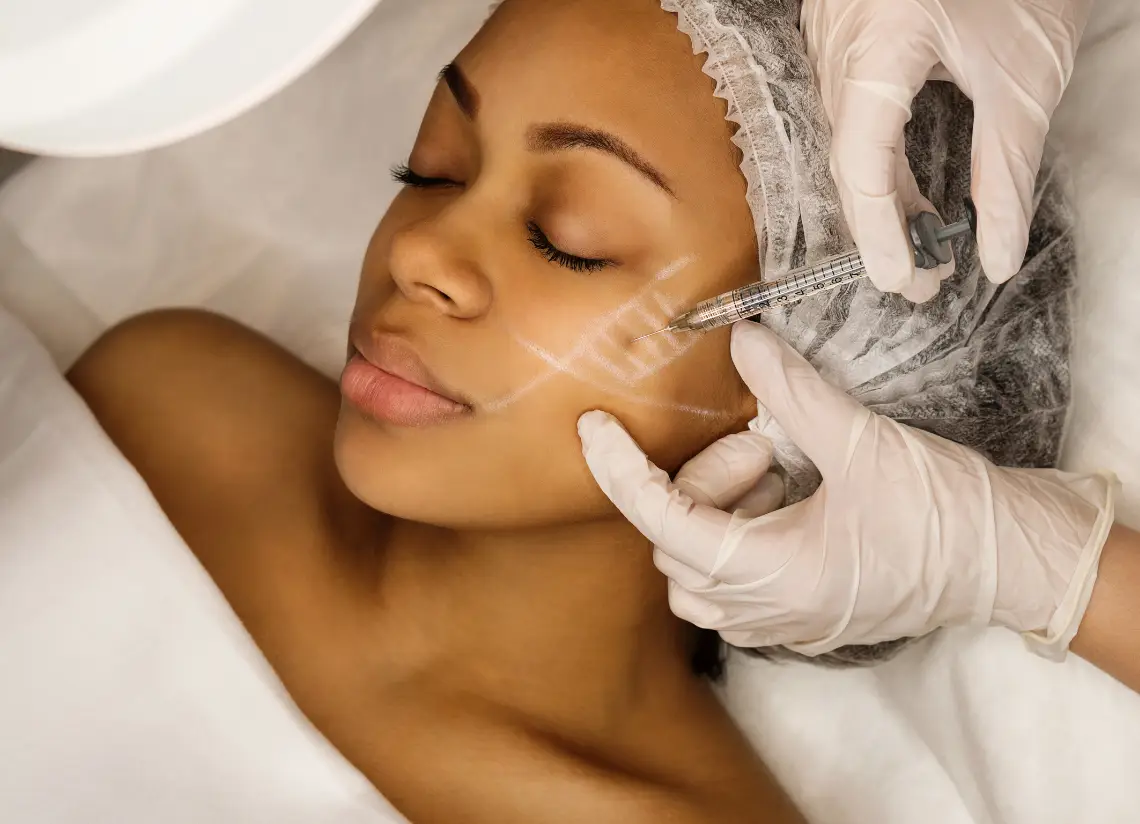
Microneedling is one of the most searched skin treatments in Glasgow, and one of the most loosely defined. The same word is used for a home roller bought online, for a salon facial, and for a medical device that works several millimetres into the skin under anaesthetic. Those are not variations of one treatment. They are different procedures with different results and different risks.
This guide explains what microneedling actually does to the skin, what it treats well and what it will not fix, how radiofrequency microneedling differs from the traditional kind, how many sessions a real course involves, and how to check that a Glasgow clinic is properly registered before you book. It is written by the team at Luxe Skin by Dr Q, the aesthetic clinic on Ingram Street in Glasgow city centre, where the microneedling performed is Morpheus8 radiofrequency microneedling.
Quick answer: microneedling uses very fine needles to create controlled microchannels in the skin. The skin repairs those channels by laying down new collagen and elastin, which is why the treatment is also called collagen induction therapy. It is used for skin texture, enlarged pores, fine lines and atrophic acne scarring, and it works as a course rather than a single session, usually three to six treatments spaced four to six weeks apart. Results build over two to three months rather than appearing straight away. If acne scarring is the main reason you are considering it, our guide to acne scar treatment in Glasgow sets out which scar types respond to which treatment. Radiofrequency microneedling adds heat at a controlled depth, which is what allows it to tighten as well as resurface.
In this guide
- What is microneedling?
- What microneedling actually does to the skin
- What microneedling treats, and what it will not fix
- Radiofrequency microneedling versus traditional microneedling
- How many microneedling sessions do you need?
- Does microneedling hurt, and what is the downtime?
- When do microneedling results appear?
- Is microneedling suitable for darker skin tones?
- Are at home microneedling rollers worth it?
- How to choose a microneedling clinic in Glasgow
- What microneedling looks like at Luxe Skin
- How microneedling combines with other treatments
- Key takeaways
- Frequently asked questions
What is microneedling?
Microneedling is a treatment in which very fine needles are passed through the surface of the skin to create thousands of tiny, controlled channels. It is also known as collagen induction therapy, because the point of the procedure is not the needling itself but the repair response it sets off underneath.
Two details separate a medical microneedling treatment from a cosmetic one. The first is depth. A device that works at a fraction of a millimetre is treating the outermost layers and will improve how skin looks and absorbs product, but it is not reaching the level where scarring lives. A device that works deeper is treating the dermis, which is where the structural change happens and also why depth control matters so much. The second is control. A medical device places each needle vertically to a set depth at a set speed. A roller drags needles through the skin at an angle, which is a different mechanical action entirely.
This matters when you are comparing prices between clinics in Glasgow. Two treatments both described as microneedling can be doing very different amounts of work, and the cheaper one is often the shallower one.
What microneedling actually does to the skin
Each microchannel is a small, deliberate injury. The skin responds to it the way it responds to any wound, in a sequence that has been described in dermatology for decades: an initial inflammatory phase, then a proliferative phase in which new tissue is built, then a long remodelling phase in which that new tissue is reorganised and strengthened. Microneedling works because it triggers that sequence thousands of times over, at a scale small enough that the skin heals without scarring.
The practical consequence is the one patients most often miss. The remodelling phase is slow. New collagen is still being laid down and reorganised weeks after the appointment, which is why a microneedling result is judged at eight to twelve weeks rather than at the end of the week. It is also why a course outperforms a single session: each treatment adds to a process that is still running from the one before.
Worth knowing: the glow people notice two or three days after microneedling is mostly swelling and increased blood flow. It is a real effect and it is not the result. The result is the texture change that is still arriving two months later, and judging the treatment by the first week is the most common reason people conclude it did not work.
What microneedling treats, and what it will not fix
Microneedling is a texture and quality treatment. It improves the surface and the structure of the skin. It does not replace lost volume, it does not relax a muscle, and it does not lift tissue that has descended. Clinics that promise all of that from one device are describing a marketing position rather than a mechanism.
| Concern | How well microneedling addresses it | What else may be needed |
|---|---|---|
| Atrophic acne scarring | One of the strongest uses, particularly for rolling and boxcar scars, over a course | Deeper scars may also need subcision or resurfacing |
| Rough or uneven texture | Well suited, improvement is usually visible by the second or third session | Often paired with a peel or laser depending on the cause |
| Enlarged pores | Good, pores appear refined as surrounding collagen thickens | Oil control and skincare maintain it |
| Fine lines and crepey skin | Good, best where lines are surface level rather than expression driven | Expression lines need a muscle relaxing treatment |
| Loose or sagging skin | Limited on its own, radiofrequency microneedling is the version that tightens | Morpheus8 or a thread lift for true descent |
| Stretch marks | Useful, especially on newer marks, and needs a longer course | Patience, results here are gradual |
| Pigmentation and melasma | Mixed, needs careful assessment first | See the hyperpigmentation pathway |
| Deep folds and volume loss | Not the right tool | Dermal fillers or structural treatments |
If your main concern is a fold rather than a texture, read our guide to the best anti ageing treatments in Glasgow first, because starting with the wrong category of treatment is the most expensive mistake in aesthetics.
Radiofrequency microneedling versus traditional microneedling
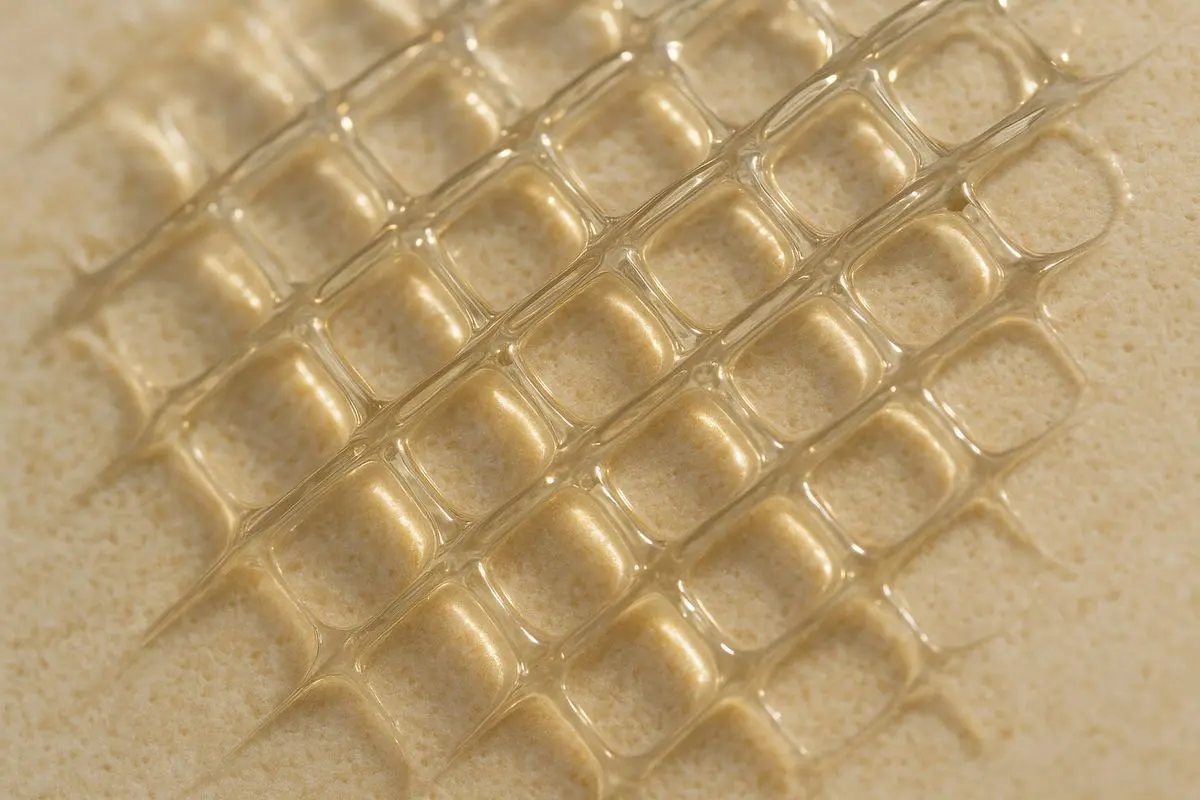
Traditional microneedling creates the channels and stops there. Radiofrequency microneedling creates the channels and then delivers radiofrequency energy through the needle tips into the tissue around them. That heat causes immediate contraction of existing collagen and a stronger, deeper stimulus to build new collagen, which is why the radiofrequency version can tighten skin as well as improve its surface.
| Traditional microneedling | Radiofrequency microneedling | |
|---|---|---|
| Mechanism | Mechanical microchannels only | Microchannels plus controlled heat at depth |
| Main strength | Texture, pores, superficial scarring | Texture and scarring, plus tightening |
| Depth of action | Set by needle length alone | Needle depth and energy level are set separately |
| Typical downtime | Redness for about a day | Redness and mild swelling, commonly one to two days |
| Suits | Skin quality with good elasticity | Skin quality where laxity is also a concern |
| Available at Luxe Skin | Not offered as a standalone treatment | Yes, as Morpheus8, from £400 |
The distinction is worth understanding before you compare quotes, because a radiofrequency treatment and a mechanical one are rarely priced alike and should not be. We have written two longer comparisons if you want the detail: Morpheus8 versus traditional microneedling and Morpheus8 versus other RF microneedling devices.
How many microneedling sessions do you need?
Most people need a course, not a single appointment. Three to six sessions spaced four to six weeks apart is the usual pattern, and the spacing exists for a reason: it gives the remodelling phase from the previous session time to run before the next stimulus is added. At Luxe Skin, a Morpheus8 course is usually three sessions four to six weeks apart, with the exact number set after Dr Q has assessed skin thickness, elasticity and the depth of any scarring.
| Concern | Typical course | Why |
|---|---|---|
| General texture and pores | Around three sessions | Surface change responds relatively quickly |
| Fine lines and early laxity | Three sessions, then review | Collagen change is cumulative and slow to peak |
| Atrophic acne scarring | Often more, reviewed as you go | Scar tissue remodels more slowly than normal skin |
| Stretch marks | A longer course | Larger area and mature tissue |
| Maintenance afterwards | Periodic single sessions | Collagen turnover continues to decline with age |
Be cautious of any clinic that quotes a fixed number of sessions before looking at your skin. The number depends on what is being treated and how your skin responds to the first one.
Not sure which version of microneedling your skin needs?
A consultation at the Ingram Street clinic starts with an assessment of your skin quality, elasticity and any scarring, then a plan built around that rather than around a device.
Does microneedling hurt, and what is the downtime?
Medical microneedling is performed after topical anaesthetic has been applied and given time to work. Most patients describe the sensation as pressure and warmth with occasional sharper moments over bonier areas such as the forehead and the jawline. It is not a comfortable treatment in the way a facial is, and it is not a painful one in the way patients often fear. If you have found injectable treatments manageable, you will find this manageable too. Our guide to what injectable treatments feel like covers the same ground for needles in general.
Downtime is short but real. Immediately afterwards the skin looks flushed, similar to mild sun exposure, and it may feel tight and warm for several hours. With radiofrequency microneedling there is usually some swelling as well, and small micro marks may be visible for a short period.
| When | What to expect | What to do |
|---|---|---|
| Day of treatment | Flushing, warmth, a tight feeling | Leave the skin alone, no makeup, gentle products only |
| Day one to two | Redness settling, possible mild swelling and micro marks | Most people return to normal activity in this window |
| Day three to five | Skin may feel dry or slightly rough as it turns over | Moisturise, avoid exfoliants and active ingredients |
| First week | Appearance returns to normal, often with a temporary glow | Resume normal skincare once the skin is comfortable |
| Weeks two to twelve | The actual result develops | Attend your next session as scheduled |
Aftercare guidance at Luxe Skin is to avoid makeup, heat exposure, exfoliation and strenuous exercise for several days unless advised otherwise, and to keep skincare gentle while the skin recovers. Sun protection is not optional afterwards. Freshly treated skin is more vulnerable to pigment change, and skipping it is the fastest way to undo the work.
When do microneedling results appear?
Some tightening from radiofrequency microneedling is visible within about two weeks. Texture improvement and deeper tightening continue to develop over eight to twelve weeks as collagen regenerates, and results keep improving for several months, particularly when a full course is completed. Those are the timelines Dr Q gives patients for Morpheus8 at Luxe Skin, and they hold reasonably well for medical microneedling generally.
Longevity depends on what you do afterwards. Morpheus8 results can last one to two years depending on lifestyle, ageing and skincare maintenance. Collagen loss does not stop because you had a treatment, which is the reasoning behind periodic maintenance sessions rather than a single course and nothing else. If you want the background on why, our explainer on collagen loss and how to combat it covers the underlying biology.
Is microneedling suitable for darker skin tones?
Microneedling is generally considered a reasonable option across a wide range of skin tones, because the mechanical action does not target pigment in the way that many light based treatments do. That is a genuine advantage for patients with richly pigmented skin, who face a higher risk of post inflammatory hyperpigmentation from aggressive resurfacing.
It is not a blanket reassurance. Any treatment that creates inflammation carries some risk of pigment change in skin that is prone to it, and radiofrequency microneedling adds heat to the equation, so settings and depth need to be chosen with that in mind. The practical answer is that this is a conversation to have at consultation, with a practitioner who will adjust the treatment rather than run a standard protocol on every patient. If pigmentation is your primary concern rather than texture, read our guide to choosing a resurfacing treatment for your skin type before booking anything.
Are at home microneedling rollers worth it?
For skin texture and scarring, no. Home rollers are deliberately short, because a device sold without training has to be shallow enough to be difficult to injure yourself with. That shallowness means they do not reach the depth where collagen remodelling happens, so they cannot do what a clinical device does.
They also carry risks a clinical treatment does not. A roller is hard to sterilise properly at home, needles blunt with repeated use and drag rather than pierce, and rolling over active acne can spread bacteria across the face. The most common outcomes we see discussed are irritation, breakouts and, in skin prone to it, pigment change.
A fair use for a home device: the very shallow rollers marketed for product absorption are a different proposition from clinical microneedling and are not trying to remodel anything. If you enjoy using one and your skin tolerates it, that is fine. Just do not expect it to treat scarring, and never use one on inflamed or broken skin.
How to choose a microneedling clinic in Glasgow
Scotland gives you a check that patients elsewhere in the UK do not have. Premises where a medical practitioner, dentist, registered nurse, registered midwife, dental care professional, pharmacist or pharmacy technician provides services must register with Healthcare Improvement Scotland as an independent clinic, and its guidance states plainly that this includes treatment and procedures for cosmetic purposes. Registered services are inspected, and the register is public.
So before you book anywhere in Glasgow, it is reasonable to ask a clinic whether it is registered with Healthcare Improvement Scotland and to look it up rather than take the answer on trust. Alongside that, five questions separate a considered clinic from a quick one.
- Who performs the treatment, and what are their medical qualifications? Ask for the name and the registration, not the brand of the device.
- Which device, and at what depth and energy for my skin? A clinic that cannot answer this is running one setting for everyone.
- How many sessions, and on what evidence for my concern? A considered answer includes a review point rather than a fixed package.
- What happens if I react badly? There should be a named person to contact and a plan, not a voicemail.
- What am I being asked to avoid, and for how long? A clinic that gives no aftercare instruction has not thought about your result.
What microneedling looks like at Luxe Skin
Luxe Skin by Dr Q is at 227 Ingram Street in Glasgow city centre. The microneedling offered here is Morpheus8 radiofrequency microneedling, priced from £400 on the price guide, and every treatment is performed by Dr Usman Qureshi.
Dr Q graduated in Medicine from the University of Glasgow in 2002 and has more than twenty years of medical experience, including years working in accident and emergency, with over 20,000 procedures completed. His approach to this treatment is depth control: assessing facial structure, skin thickness and the specific concern, then setting the energy and depth to match, rather than applying one protocol to every face. You can read more about Dr Q and his background.
In practice, a Morpheus8 appointment runs like this. Consultation first, covering skin quality, elasticity, depth of lines and any scarring, and how many sessions will benefit your skin. Topical anaesthetic is applied and left to work. The device is passed across the area, delivering radiofrequency at controlled depths, and you feel warmth and pressure. Treatment time is between twenty and forty minutes depending on the size of the area. Morpheus8 is used on the face and neck and also on the abdomen, arms, knees, stomach stretch marks and the chest and décolletage.
The device does not decide the result. The depth, the energy and the assessment that set them do, which is why the consultation matters more than the brand name on the handpiece.
How microneedling combines with other treatments
Microneedling sits in the skin quality category, which means it pairs naturally with treatments that do a different job. It is rarely the only thing a face needs, and it is often the foundation the rest is built on.
- With regenerative injectables. Polynucleotides and exosome therapy work on skin quality from a different direction, improving density and the healing environment.
- With lifting treatments. Where tissue has genuinely descended, a thread lift repositions it and microneedling improves the quality of the skin that is being repositioned. Our ninety day treatment stack sets out how those are sequenced.
- With resurfacing. Laser skin resurfacing, from £500, addresses pigment and surface damage that microneedling does not target directly.
- With ongoing maintenance. If you expect to treat your skin regularly, the Q Plan membership is built around planned, spaced treatment rather than one off appointments.
What matters is sequence. Treatments that create controlled inflammation are not stacked on the same day without reason, and the order they are done in changes how well each one works. That is a planning conversation, and it belongs at consultation. If you are working out where to start at your age and stage, our decade by decade guide to treatments is a useful starting point, and the full range is on the face treatments page.
Key takeaways
- Microneedling is collagen induction therapy. The needles are the trigger, the repair response is the treatment.
- It is a texture and quality treatment. It does not replace volume, relax muscle or lift descended tissue.
- Radiofrequency microneedling adds heat at a controlled depth, which is what allows it to tighten as well as resurface.
- Plan for a course of three to six sessions, four to six weeks apart, and judge the result at eight to twelve weeks.
- Home rollers do not reach the depth that matters and carry risks a clinical treatment does not.
- In Scotland you can check whether a clinic is registered with Healthcare Improvement Scotland. Use it.
- At Luxe Skin the microneedling performed is Morpheus8, from £400, by Dr Usman Qureshi at 227 Ingram Street.
Frequently asked questions
How much does microneedling cost in Glasgow?
It varies widely because the word covers very different treatments. A shallow salon device and a medical radiofrequency device are not comparable, and the price usually reflects that. At Luxe Skin, Morpheus8 radiofrequency microneedling starts from £400, and the current figures for every treatment are on the price guide. Ask any clinic what depth and what device the quote covers before comparing it with another.
How many microneedling sessions do you need to see a difference?
Most people need a course of three to six sessions spaced four to six weeks apart, with the exact number set by what is being treated. Texture and pore refinement often show by the second or third session. Acne scarring usually needs more and is reviewed as the course progresses. A visible change after a single session is normally swelling rather than remodelling.
Is microneedling better than laser?
Neither is better in general, they treat different things. Microneedling is a mechanical stimulus that works well for texture, pores and atrophic scarring. Laser resurfacing uses light energy and is stronger on pigment and sun damage. Skin type, the concern being treated and how much downtime you can take all influence which is appropriate, which is why the choice is made at consultation rather than from a price list.
Does microneedling work for acne scars?
It is one of the treatments most consistently used for atrophic acne scarring, particularly rolling and boxcar scars, and it works by remodelling the tissue underneath rather than covering the surface. It works over a course rather than in one session, deeper or tethered scars may need additional techniques, and it is not performed over active inflammatory acne.
What should you not do after microneedling?
Avoid makeup, heat exposure, exfoliation and strenuous exercise for several days unless your practitioner advises otherwise, and keep skincare gentle while the skin recovers. Leave active ingredients such as retinoids and acids until the skin is comfortable again. Sun protection is essential, because freshly treated skin is more vulnerable to pigment change.
Can microneedling make skin worse?
It can if it is done at the wrong depth, on unsuitable skin, or without aftercare. The recognised risks are prolonged redness, infection where hygiene is poor, and pigment change in skin prone to it, and rolling over active acne can spread bacteria. This is why assessment, sterile technique and appropriate settings matter more than the device itself, and why home devices used on inflamed skin cause most of the problems people describe.
How long do microneedling results last?
The collagen built by a course is durable, but ageing continues. Morpheus8 results can last one to two years depending on lifestyle, ageing and skincare maintenance, which is why periodic maintenance sessions are usually recommended rather than treating a course as a permanent fix.
Who performs microneedling at Luxe Skin in Glasgow?
Dr Usman Qureshi, known as Dr Q, who graduated in Medicine from the University of Glasgow in 2002 and has more than twenty years of medical experience across general practice, emergency medicine and cosmetic medicine, with over 20,000 procedures completed. Every treatment at the Ingram Street clinic is performed by him.
Book a skin assessment in Glasgow
Bring your questions and your current skincare. Dr Q will assess your skin and tell you whether microneedling is the right starting point, or whether something else should come first.
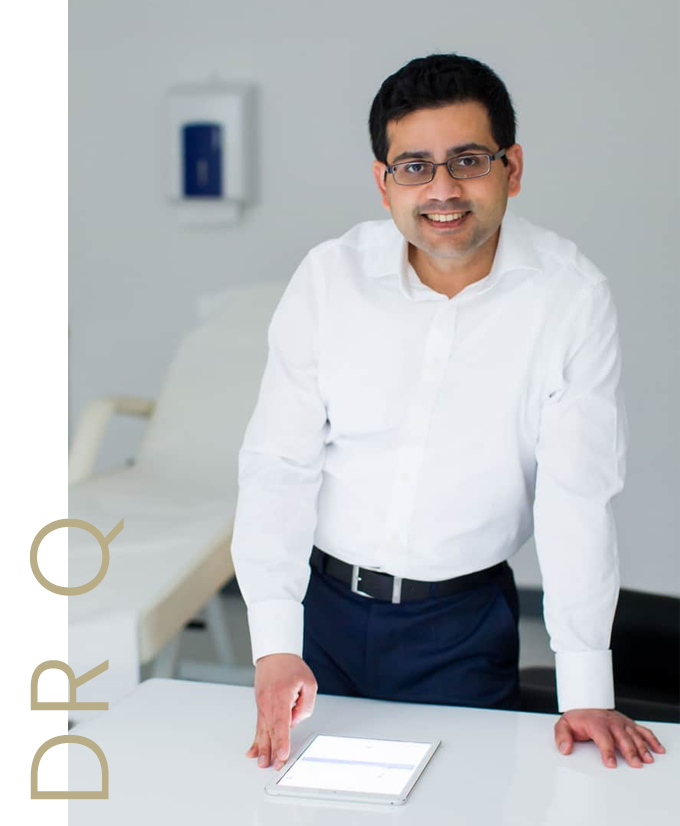
Dr Usman Qureshi (Dr Q) is a leading expert in aesthetic medicine with a 22 year career and a background spanning general practice, including A&E, and 12 years specialising in cosmetic procedures. A University of Glasgow graduate of 2002, he is the innovator behind the signature Q Lift, has performed over 20,000 procedures, and is an international speaker and trainer whose work has featured in Glamour and Harpers Bazaar.