If you are thinking about Botox for the first time, the question that usually comes before every other one is simple: does it hurt? It is asked at almost every first consultation at Luxe Skin by Dr Q, the aesthetic clinic on Ingram Street in Glasgow, and it deserves a straight answer rather than a reassuring shrug.
This guide explains exactly what anti wrinkle injections feel like, which areas are sharper than others, how Botox compares with other injectable treatments for comfort, what genuinely reduces discomfort and what happens in the hours and days afterwards. It is written for the person who has never had an injectable treatment and would like to know what they are walking into.
Quick answer: most patients describe Botox as a quick pinch or a small scratch lasting about a second per injection point, not as pain. The needle is far finer than the one used for a blood test and the volume injected is tiny. A full upper face treatment takes around fifteen minutes and involves only a handful of those brief moments. Sensitivity varies by area, with the forehead usually the easiest and the space between the brows, the upper lip and the chin the sharpest. There is no lasting soreness afterwards, and most people go straight back to work.
In this guide
- Does Botox hurt?
- What a Botox injection actually feels like
- Which areas are most sensitive?
- How Botox compares with other treatments
- What makes the biggest difference to comfort
- Numbing, cooling and other comfort options
- Does Botox hurt afterwards?
- Ten ways to make your first appointment easier
- If you have a genuine needle phobia
- When discomfort is not normal
- What a first Botox appointment looks like at Luxe Skin
- Frequently asked questions
Does Botox hurt?
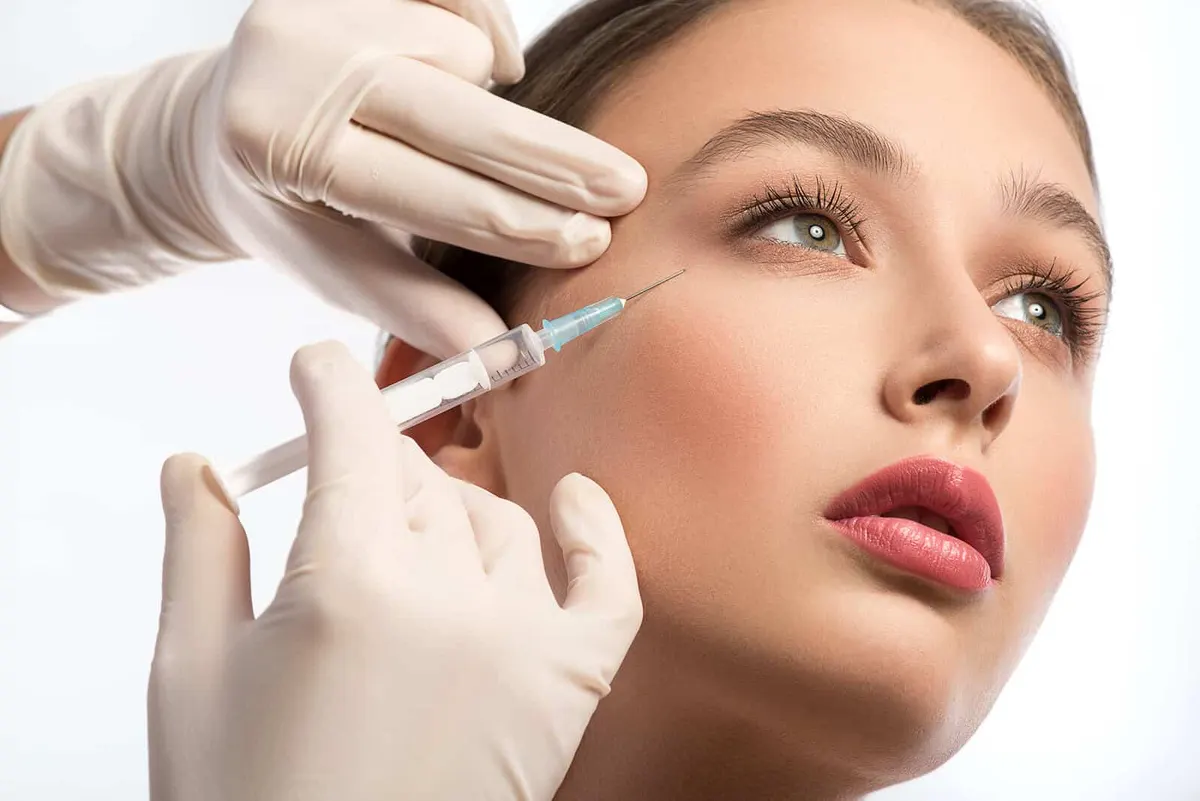
Botox does not hurt in the way most people expect. The treatment uses an extremely fine needle to place a very small amount of product just into the surface of the muscle, so there is no deep injection, no stretching of the tissue and no lingering ache. Patients most often compare the sensation to a quick pinch, a small insect bite or a static shock, over in about a second.
Context helps. A blood test uses a needle several times wider and stays in place for far longer. A dental injection places anaesthetic under pressure into a highly sensitive area. Botox sits at the gentle end of anything you are likely to have had done medically, which is why it is one of the few cosmetic treatments performed comfortably without anaesthetic on a lunch break.
The other reason it feels manageable is that it is quick. At Luxe Skin, a Botox appointment takes around fifteen minutes in total, and the injections themselves account for a small part of that. Most of your time with Dr Q is assessment: watching how your muscles move, where the lines fall and how much movement you want to keep.
What a Botox injection actually feels like
Broken down moment by moment, a single injection point involves three sensations, none of which lasts long.
- The cleanse. The area is cleaned before treatment, which feels cool and slightly evaporative on the skin.
- The entry. A brief, sharp pinch as the needle passes through the skin. This is the part people ask about, and it lasts roughly one second.
- The placement. A faint pressure or fullness as the product goes in. Many patients do not register this at all because the volume is so small.
Between points, there is nothing. Your practitioner repositions, marks the next site and repeats. A standard three area upper face treatment involves a series of these brief moments spread across the forehead, the frown lines and the crow’s feet, and the whole sequence is usually finished in a few minutes.
What patients say most often: the anticipation is worse than the treatment. Almost everyone who was nervous before their first appointment reports that the second one felt easier, even though nothing about the technique had changed. Knowing what is coming genuinely lowers what you feel.
Which areas are most sensitive?
Comfort varies across the face because skin thickness, nerve density and how close the bone sits to the surface all differ. The table below sets out how the commonly treated areas usually compare. Every face is different, and this is a guide rather than a rule.
| Treatment area | What it usually feels like | Why |
|---|---|---|
| Forehead lines | The easiest area for most people | Skin is relatively thick and the injection points are shallow |
| Frown lines between the brows | A sharper, brief sting | Denser nerve supply and firmer muscle in a small area |
| Crow’s feet around the eyes | Quick and light, occasionally watery eyes | Very thin skin, but shallow placement and a fine needle |
| Bunny lines on the nose | A short, distinct pinch | Thin skin sitting close to cartilage and bone |
| Lip lines | One of the sharper areas | The upper lip is one of the most nerve rich parts of the face |
| Chin dimpling | Firm pressure with a brief sting | Muscle sits close to bone with little cushioning |
| Jawline and masseter | Deeper pressure rather than sharpness | A larger muscle treated with deeper placement |
| Underarms for excessive sweating | Multiple small pinches over a wider area | More injection points across a broad, sensitive surface |
If you are having masseter Botox for jaw slimming or teeth grinding, expect something different rather than something worse. The masseter is a large, powerful chewing muscle, so the sensation is more of a firm, deep pressure than a surface sting.
How Botox compares with other treatments
Placing Botox alongside the treatments people have usually had before it is the fastest way to calibrate expectations. The comparison below reflects how patients typically describe each experience.
| Treatment | Typical comfort level | What drives it |
|---|---|---|
| Botox and anti wrinkle injections | Brief pinch, seconds per point | Very fine needle, tiny volume, shallow placement |
| Dermal filler | Moderate pressure and a firm ache | Larger volume and a wider needle or cannula, more tissue stretch |
| Microneedling | Prickly and warm across the whole area | Many passes over the full face, usually with numbing cream |
| Blood test | A sustained scratch for several seconds | A much wider needle held in the vein |
| Dental anaesthetic injection | Firm, prolonged pressure | Volume delivered under pressure into a very sensitive area |
If you have had a blood test without difficulty, Botox is very unlikely to trouble you. If you are comparing it with dermal fillers, most patients find Botox the easier of the two by a clear margin.
What makes the biggest difference to comfort
Comfort during an injectable treatment is mostly a function of how it is performed. The variables that matter are these.
- Needle gauge. Botox is delivered with a very fine needle. The finer the needle, the less you feel as it passes through the skin.
- Injection depth and accuracy. Product placed precisely where it is needed means fewer injection points and less repositioning.
- Anatomical knowledge. Knowing exactly where the muscle sits avoids fishing for the right layer, which is what turns a quick treatment into an uncomfortable one.
- Pace. A practitioner who works steadily and tells you what is coming next keeps you relaxed, and a relaxed muscle is easier to inject.
- Fresh needles. A needle blunts slightly with each pass through skin, so changing needles during a treatment keeps every point as smooth as the first.
This is where experience shows. Dr Usman Qureshi graduated in Medicine from the University of Glasgow in 2002 and brings more than twenty years of medical practice, including general practice, emergency medicine and over a decade specialising in cosmetic medicine, with more than twenty thousand treatments performed. That background is usually discussed in terms of how natural the result looks, but it shows up just as clearly in how the appointment feels.
Precision is a comfort measure as much as an aesthetic one. Knowing exactly where the muscle sits means fewer injection points, less time in the chair and less for the patient to feel.
The approach to injectable treatment at Luxe Skin by Dr Q
Numbing, cooling and other comfort options
Most patients do not need numbing for Botox, simply because the treatment is over so quickly. Topical anaesthetic cream needs twenty to thirty minutes to work properly, which for a fifteen minute treatment often means waiting longer for the numbing than for the treatment itself.
That said, comfort options are routine in aesthetic practice and are worth asking about if needles genuinely worry you or if you are having a more sensitive area treated, such as the upper lip or the underarms. Cooling the skin immediately before injection is quick and effective, and distraction techniques, from a vibration device to simply talking through what is happening, measurably reduce what people report feeling.
Worth doing: mention any anxiety about needles when you book, not when you arrive. It lets the appointment be planned with a little more time, which is the single most useful adjustment that can be made for a nervous patient.
Does Botox hurt afterwards?
No. There is no downtime after Botox and no lasting soreness. What you may notice in the first hour is small raised bumps at each injection point, which look a little like insect bites and settle within about fifteen to thirty minutes, and mild redness that fades quickly.
Some patients feel a mild tightness or heaviness in the forehead in the first few days as the muscle begins to relax. It is a sensation rather than pain, and it settles as the effect evens out. A small number notice a mild headache in the first twenty four hours, which usually responds to paracetamol.
The first twenty four hours
- Stay upright for several hours after treatment rather than lying flat.
- Avoid rubbing, massaging or pressing the treated area.
- Skip strenuous exercise, saunas and steam rooms for the rest of the day.
- Leave makeup off the treated area for a few hours where you can.
- Return to work, driving and normal activities straight away, which most patients do.
Bruising is possible at any injection site, and it is more likely if you take blood thinning medication, drink alcohol shortly beforehand or have treatment during a period when you bruise easily. It is minor and covers easily with makeup after the first day. Our full Botox aftercare guide covers this in more detail.
Results themselves take a little patience: most patients see lines softening within three to five days, with the full effect visible at about two weeks and lasting three to four months. If you would like the detail, read how long Botox lasts.
Ten ways to make your first appointment easier
None of these change the treatment. They change how you experience it, which for a first timer is the part that matters.
- Eat beforehand. Arriving with low blood sugar makes anyone more likely to feel faint or lightheaded.
- Skip alcohol the night before. It dilates blood vessels and makes bruising more likely.
- Avoid anti inflammatory painkillers for a few days beforehand unless you take them on medical advice, because they thin the blood slightly. Never stop prescribed medication without speaking to your doctor.
- Book at a calm time of day. Rushing in between meetings raises tension, and tense muscles are less comfortable to treat.
- Say you are nervous. It changes how the appointment is paced.
- Breathe out as the needle goes in. A slow exhale genuinely lowers what you register.
- Do not hold your breath or tense your face. Tension makes every point sharper.
- Bring something to focus on. Music through one earphone works well for many patients.
- Ask what is happening next. Knowing the order of the points removes the flinch of surprise.
- Plan a quiet couple of hours afterwards so you are not tempted to head straight into a workout.
If this is your first cosmetic treatment of any kind, our first time facial aesthetics guide walks through the wider process, from consultation to review.
If you have a genuine needle phobia
Needle phobia is common and it is not the same as ordinary nervousness. If the thought of a needle has previously made you feel faint, dizzy or physically unwell, say so clearly before treatment. It is a recognised response, it is manageable, and it is far better handled in advance than discovered halfway through an appointment.
Practical steps that help include being treated lying down rather than seated, having the treatment tray kept out of your line of sight, agreeing a signal to pause, and starting with a single area rather than a full face plan so the first experience is short. If the response has been severe in the past, discuss it with your GP as well, because there are established approaches for managing it.
When discomfort is not normal
Botox is a well studied treatment with a long safety record when it is performed by an experienced medical practitioner. Discomfort beyond a brief sting during treatment and mild tenderness afterwards is not expected, and there are a small number of signs that should prompt a call to your clinic rather than a wait and see approach.
- Increasing pain rather than settling discomfort in the days after treatment.
- Spreading redness, heat or swelling around an injection site.
- Any sign of infection, including a temperature.
- Drooping of an eyelid or eyebrow, or a noticeably uneven result once the product has settled.
- Difficulty swallowing or breathing, or muscle weakness away from the treated area, which is rare and needs urgent medical attention.
If something does not feel right, contact the clinic that treated you rather than waiting for your review appointment. At Luxe Skin, patients can reach the clinic on 0141 573 1473 or by WhatsApp on 07538 304839, and Dr Q would always rather see you early.
What a first Botox appointment looks like at Luxe Skin
Luxe Skin by Dr Q is an aesthetic clinic at 227 Ingram Street in Glasgow city centre, where every injectable treatment is performed by Dr Usman Qureshi personally. A first Botox appointment runs in four parts.
- Consultation. Dr Q assesses how your facial muscles move, the depth of your lines at rest and in motion, and how much movement you want to keep. This is also where you raise any anxiety about needles.
- Planning. Dosing is matched to the strength of your muscle movement and the softness you are aiming for, so the plan is specific to your face rather than a standard pattern.
- Treatment. The area is cleansed and a series of precise injections are placed with very fine needles. The treatment itself takes around fifteen minutes.
- Afterwards. There is no downtime. You are given aftercare guidance and can return to your day immediately, with results developing over the following two weeks.
You can read more about the treatment itself on the Botox in Glasgow page, see the wider range on the face treatments page, or learn about the doctor on the about Dr Q page. If you are treating your skin as an ongoing plan rather than a one off, the Q Plan membership guide explains how patients spread treatment across the year.
Key takeaways: Botox is a brief pinch rather than a painful treatment, lasting about a second per injection point. The forehead is usually the easiest area and the brow line, upper lip and chin the sharpest. It is generally more comfortable than dermal filler and far more comfortable than a blood test. Numbing is rarely needed but can be arranged. There is no lasting soreness, no downtime, and the whole appointment takes around fifteen minutes.
Frequently asked questions
Does Botox hurt?
For most people, very little. Botox is injected with an extremely fine needle into the surface of the muscle, and the sensation is usually described as a quick pinch or a small scratch that is over in about a second. A full upper face treatment involves only a handful of those moments across roughly fifteen minutes in the chair.
Which Botox area hurts the most?
The areas with thinner skin and more nerve endings tend to be the sharpest: between the brows, around the eyes, the upper lip and the chin. The forehead is usually the easiest. None of these are painful in the way patients expect, and the difference between the easiest and the sharpest area is small.
Is Botox more painful than dermal filler?
Usually less. Botox uses a very fine needle and a tiny volume of product, so there is little stretching of the tissue. Dermal filler places a larger volume through a slightly larger needle or a cannula, which creates more pressure and more of a firm ache during placement.
Can I have numbing cream before Botox?
Topical numbing cream and cooling are used routinely in aesthetic practice for more sensitive areas. Most people do not need either for Botox because the treatment is so quick, but if needles make you anxious, raise it when you book so it can be planned into your appointment time.
Does Botox hurt more the first time?
The first appointment usually feels sharper because you do not yet know what to expect, and anticipation raises how strongly you register a sensation. Most patients say their second treatment felt easier even though nothing about the technique changed.
How long does the discomfort last after Botox?
Seconds, not days. You may notice small raised bumps at the injection points that settle within fifteen to thirty minutes, and mild redness that fades quickly. A dull heaviness in the forehead in the first few days is common as the muscle begins to relax, and it is not painful.
Can I take painkillers before Botox?
Speak to your practitioner first. Anti inflammatory painkillers such as ibuprofen and aspirin thin the blood slightly and can make bruising more likely, so they are usually avoided in the days before an injectable treatment unless you take them for a medical reason. Never stop prescribed medication without medical advice.
Who performs Botox at Luxe Skin in Glasgow?
Dr Usman Qureshi, known as Dr Q, who graduated in Medicine from the University of Glasgow in 2002 and has more than twenty years of medical experience across general practice, emergency medicine and over a decade in cosmetic medicine. Every treatment at the Ingram Street clinic is performed by him.
Still nervous about your first treatment?
Tell us when you book and your appointment will be planned with the time to talk it through first. Dr Q performs every treatment at the Ingram Street clinic in Glasgow personally.
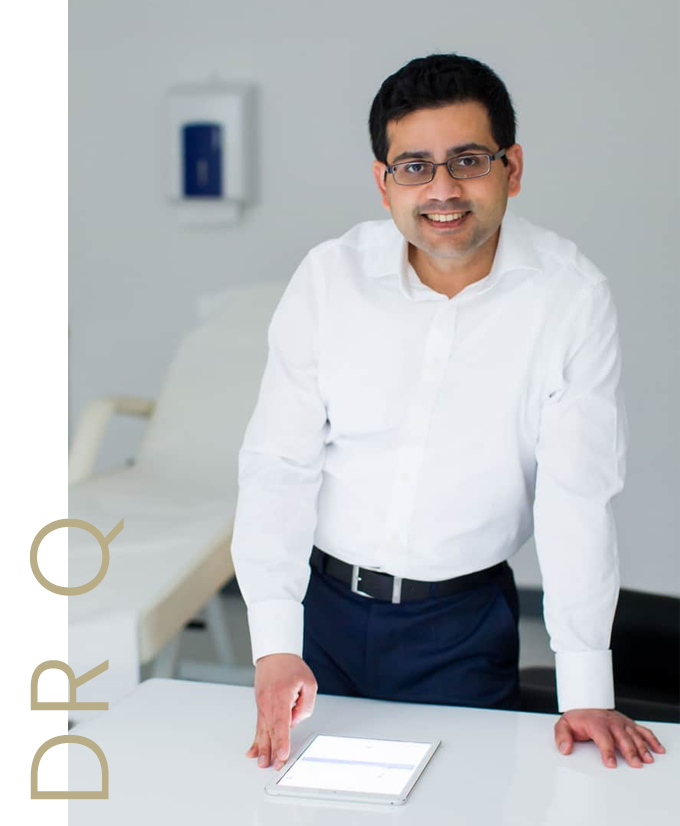
Dr Usman Qureshi (Dr Q) is a leading expert in aesthetic medicine with a 22 year career and a background spanning general practice, including A&E, and 12 years specialising in cosmetic procedures. A University of Glasgow graduate of 2002, he is the innovator behind the signature Q Lift, has performed over 20,000 procedures, and is an international speaker and trainer whose work has featured in Glamour and Harpers Bazaar.