In the world of aesthetic medicine, few treatments have gained as much popularity as Botox and dermal fillers. These non-surgical options have revolutionised facial rejuvenation, offering remarkable results without the downtime and risks associated with surgery. However, despite their widespread use, there remains considerable confusion about what each treatment actually does and which concerns they best address.
At Luxe Skin in Glasgow, we frequently meet patients who are uncertain about whether Botox or fillers would better suit their needs. This comprehensive guide aims to clarify the differences between these treatments, explain their specific applications, and help you determine which option, or combination of options, might be most appropriate for your unique concerns.
By understanding the science behind these treatments and their distinct capabilities, you’ll be better equipped to have informed discussions with your aesthetic practitioner and achieve the natural-looking results you desire.
Understanding the Fundamentals: How Each Treatment Works
Before comparing applications, it’s essential to understand the fundamental mechanisms behind Botox and dermal fillers, as they work in completely different ways.
Botox: The Muscle Relaxer
Botox (Botulinum Toxin Type A) is a neuromodulator that temporarily blocks the signals between nerves and muscles, reducing muscle activity in the treated area.
The Science Behind Botox
When injected into specific facial muscles, Botox blocks the release of acetylcholine, the neurotransmitter responsible for triggering muscle contractions. This creates a controlled relaxation of the treated muscles, which:
1.Reduces dynamic wrinkles, Lines formed by repeated muscle movements
2.Prevents deepening of expression lines, Stops existing lines from becoming more pronounced
3.Creates a smoother appearance, Relaxed muscles lead to smoother overlying skin
4.Offers preventative benefits, Can delay the formation of permanent lines in younger patients
The effects are localised to the specific muscles treated and gradually wear off as the body metabolises the product over 3-4 months.
Dermal Fillers: The Volume Restorers
Dermal fillers are gel-like substances injected beneath the skin to restore volume, smooth lines, or enhance facial contours.
The Science Behind Fillers
Most modern fillers are made from hyaluronic acid (HA), a naturally occurring substance in the skin that attracts and binds water. When injected, fillers:
1.Add immediate volume, Physically occupying space beneath the skin
2.Attract moisture, HA can hold up to 1,000 times its weight in water
3.Stimulate collagen production, Some fillers trigger the body’s natural collagen synthesis
4.Provide structural support, Can lift and support sagging tissues
Different filler formulations vary in thickness, cohesivity, and longevity, allowing practitioners to select the optimal product for specific areas and concerns.
Key Differences: A Side-by-Side Comparison
To help clarify the distinctions between these treatments, let’s compare them across several important parameters:
| Feature | Botox | Dermal Fillers |
| Primary Action | Relaxes muscles | Adds volume |
| Main Target | Dynamic wrinkles caused by muscle movement | Static wrinkles and volume loss |
| Onset of Results | Gradual (3-14 days) | Immediate (with some initial swelling) |
| Duration | 3-4 months typically | 6-24 months depending on product and area |
| Reversibility | Not reversible (must wait for effects to wear off) | HA fillers can be dissolved with hyaluronidase |
| Treatment Areas | Primarily upper face (forehead, frown, crow’s feet) | Versatile use throughout face |
| Treatment Time | Quick (10-15 minutes) | Moderate (15-45 minutes depending on areas) |
| Discomfort Level | Minimal (brief pinprick sensation) | Mild to moderate (varies by area) |
| Downtime | None to minimal | Minimal to moderate (potential swelling/bruising) |
| Average Cost in Glasgow | £200-£350 for 1-3 areas | £350-£750+ depending on product and volume |
Specific Concerns: Which Treatment Works Best?
Different facial concerns respond better to specific treatments. Understanding which treatment addresses your particular concerns is key to achieving optimal results.
Forehead Lines
Best Treatment: Primarily Botox
Horizontal forehead lines form when we raise our eyebrows, making them classic dynamic wrinkles. Botox relaxes the frontalis muscle, reducing the appearance of these lines while still allowing for natural expression when administered by skilled practitioners.
Why Not Fillers: Filling horizontal forehead lines can create an unnatural, heavy appearance and doesn’t address the underlying muscle movement causing the lines.
Frown Lines (Glabellar Lines)
Best Treatment: Primarily Botox
These vertical lines between the eyebrows result from contracting the corrugator and procerus muscles when concentrating or frowning. Botox effectively relaxes these muscles, softening the lines and preventing the “angry” appearance they can create.
When to Consider Adding Fillers: For very deep, etched-in frown lines that remain visible even when the face is at rest, a combination approach may be beneficial: Botox to prevent further deepening and a small amount of filler to smooth the existing static line.
Crow’s Feet
Best Treatment: Primarily Botox
These lines radiating from the outer corners of the eyes are caused by the orbicularis oculi muscle contracting when we smile or squint. Botox subtly relaxes this muscle, reducing the appearance of crow’s feet while maintaining natural eye expressions.
Why Not Fillers: The skin around the eyes is extremely thin, making fillers in this precise area potentially lumpy or visible. Additionally, fillers don’t address the dynamic muscle movement that creates these lines.
Under-Eye Hollows and Tear Troughs
Best Treatment: Primarily Fillers
Hollowing under the eyes results from volume loss and structural changes, not muscle movement. Specialised hyaluronic acid fillers designed for this delicate area can restore volume, reducing the shadowed appearance and creating a more rested look.
Why Not Botox: Botox doesn’t address volume loss and could potentially weaken important supportive muscles around the eye if used incorrectly in this area.
Nasolabial Folds (Smile Lines)
Best Treatment: Primarily Fillers
These lines running from the sides of the nose to the corners of the mouth result from a combination of volume loss in the cheeks, structural descent of facial tissues, and repeated facial movements. Fillers can restore volume in the cheek and fold area, providing structural support that softens these lines.
When to Consider Adding Botox: For some patients, a small amount of Botox in the upper lip area (known as a “lip flip”) can provide additional improvement by subtly relaxing muscles that pull down on these folds.
Marionette Lines and Downturned Mouth Corners
Best Treatment: Combination Approach
These lines running from the corners of the mouth down toward the chin benefit from a dual approach:
•Fillers restore volume and provide structural support
•Strategic Botox relaxes the depressor anguli oris muscle that pulls down the mouth corners
This combination addresses both the structural and muscular components creating these lines.
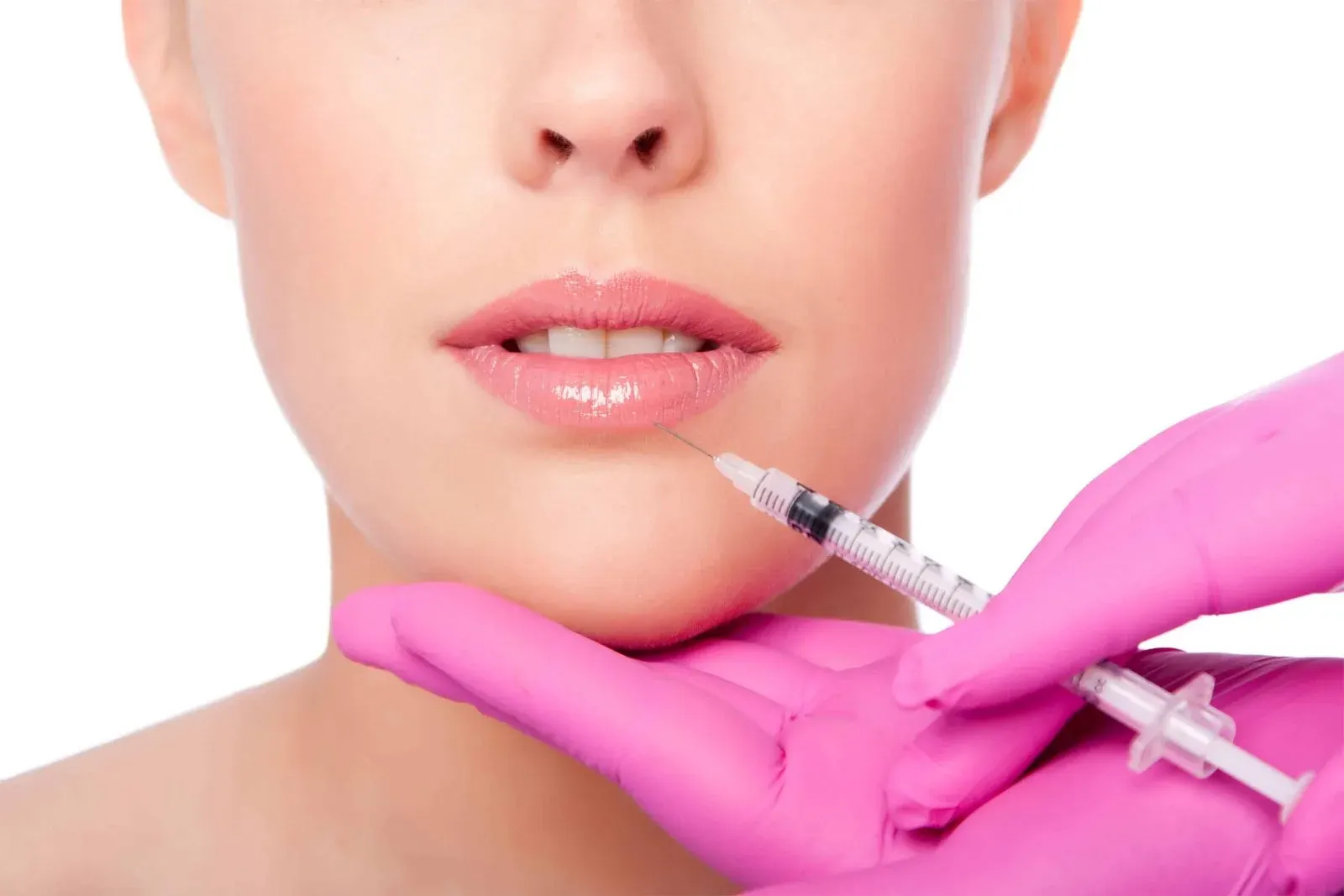
Lip Enhancement
Best Treatment: Primarily Fillers
Fillers can enhance lip volume, definition, and symmetry while also addressing fine lines around the mouth. Modern techniques focus on natural-looking enhancement that respects the patient’s original lip shape and facial proportions.
When to Consider Adding Botox: A small amount of Botox (the “lip flip” technique) can relax the muscle above the upper lip, allowing it to roll outward slightly for a subtle enhancement that complements filler results.
Jawline Definition
Best Treatment: Depends on specific concern
•For slimming a wide jawline caused by masseter muscle hypertrophy: Botox
•For enhancing jawline definition and addressing jowling: Fillers
•For comprehensive rejuvenation: Often a combination approach
Chin Enhancement
Best Treatment: Primarily Fillers
Fillers can add projection, improve proportion, and enhance the chin-to-neck angle without surgery. The results are immediate and can dramatically improve facial balance.
Why Not Botox: Botox doesn’t add volume or structure, which is typically what’s needed for chin enhancement.
Combination Approaches: When Two Is Better Than One
For many patients, especially those with multiple concerns or those in their 40s and beyond, combining Botox and fillers often provides superior results to either treatment alone.
The Synergistic Effect
When thoughtfully combined, these treatments complement each other in several ways:
1.Addressing different aspects of ageing, Botox for dynamic wrinkles, fillers for volume loss
2.Enhanced longevity, Botox can extend filler longevity by reducing movement in treated areas
3.Comprehensive rejuvenation, Creating harmony between different facial features
4.Natural-looking results, Avoiding over-correction with either treatment
Popular Combination Protocols
At DR Q Luxe Skin in Glasgow, we’ve developed several signature combination approaches:
The Refresh Protocol
Ideal for patients in their 30s to early 40s with early signs of ageing:
•Botox to upper face (forehead, frown, crow’s feet)
•Strategic filler placement in mid-face for subtle volume restoration
•Optional lip enhancement
The Rejuvenate Protocol
Designed for patients in their 40s to 50s with moderate signs of ageing:
•Botox to upper face and possibly neck bands
•Comprehensive filler treatment to cheeks, nasolabial folds, and marionette lines
•Optional jawline definition
The Restore Protocol
Tailored for patients in their 50s and beyond with more significant signs of ageing:
•Botox to upper face with specialised techniques to avoid heaviness
•Multi-layer filler approach addressing deep, mid, and superficial volume loss
•Temple and jawline restoration for structural support
Treatment Sequencing
The order of treatments can impact results:
Botox First Approach:
•Allows muscles to relax before filler placement
•Prevents filler migration due to strong muscle movement
•Typically scheduled 1-2 weeks apart
Filler First Approach:
•Addresses structural volume loss before refining with Botox
•May be preferred for significant volume loss
•Typically scheduled 1-2 weeks apart
Same-Day Combination:
•Convenient for patients with limited availability
•Requires experienced practitioner to account for potential interaction
•Botox typically administered first, followed by fillers
Age-Specific Considerations: Tailoring Treatments to Life Stages
Different age groups typically benefit from different approaches to Botox and fillers.
In Your 20s: Prevention and Enhancement
Typical Concerns:
•Early expression lines
•Facial balancing and enhancement
•Preventative ageing
Recommended Approach:
•”Baby Botox”, lighter doses for subtle effect
•Targeted enhancement with fillers (typically lips or cheeks)
•Focus on prevention rather than correction
What this usually looks like in practice: small, conservative doses of Botox to the forehead and between the brows, placed to soften expression lines as they begin to form while keeping natural movement. A single subtle lip or cheek filler treatment is sometimes added alongside it. The aim in this decade is prevention rather than correction.
In Your 30s: Early Intervention
Typical Concerns:
•Established expression lines
•Early volume loss in mid-face
•Under-eye hollowing
•Lip definition loss
Recommended Approach:
•Regular Botox to upper face
•Strategic filler placement for early volume loss
•Possible tear trough treatment
•Skin quality treatments to complement injectables
What this usually looks like in practice: treatment commonly starts in the frown area once those lines are visible with the face at rest, with cheek filler considered later if the mid face has started to flatten. Combining the two is routine by the mid thirties, and the intended result is a rested appearance rather than a visible change.
In Your 40s: Comprehensive Approach
Typical Concerns:
•Established static and dynamic wrinkles
•Noticeable volume loss
•Beginning jowling
•Lip thinning
Recommended Approach:
•Botox to multiple areas including upper face and possibly neck
•Comprehensive filler strategy addressing multiple areas
•Often benefits from combination treatments
•Treatment of both primary and secondary facial ageing signs
What this usually looks like in practice: in the forties several changes tend to arrive together, deeper lines, flatter cheeks and a less defined jawline. The usual response is a combined plan, Botox to the upper face with filler to the cheeks, nasolabial folds and jawline, sequenced so overall facial balance is kept rather than treating one area in isolation.
In Your 50s and Beyond: Restoration and Redefinition
Typical Concerns:
•Significant volume loss
•Structural descent
•Established static wrinkles
•Skin quality changes
Recommended Approach:
•Carefully administered Botox (often with modified techniques)
•Multi-layer and multi-area filler treatments
•Focus on structural support and lifting
•Often combined with energy-based treatments for comprehensive results
What this usually looks like in practice: plans at this stage are multi layered, combining carefully dosed Botox to the upper face, filler placed for structural support in the cheeks, temples and jawline, and a skin quality treatment such as Morpheus8. The concern raised most often in consultation is looking overtreated, so doses are built up gradually across sessions rather than delivered at once.
Making Your Decision: Practical Considerations
Beyond understanding which treatment addresses specific concerns, several practical factors may influence your decision between Botox and fillers.
Budget Considerations
Initial Investment:
•Botox typically has a lower entry price point (from £200 in Glasgow)
•Fillers generally require a higher initial investment (from £350 in Glasgow)
Long-Term Cost:
•Botox requires more frequent maintenance (every 3-4 months)
•Fillers last longer (6-24 months depending on product and area)
•Annual maintenance costs may be similar despite different treatment frequencies
Time Factors
Consider your schedule and availability:
•Treatment time: Botox appointments are typically quicker (15-20 minutes vs. 30-60 minutes for fillers)
•Downtime: Botox has essentially no downtime; fillers may have 1-3 days of swelling
•Maintenance frequency: Botox requires more frequent appointments but with minimal disruption
Results Timeline
Consider when you want to see results:
•Immediate needs: Fillers provide instant results (though with initial swelling)
•Gradual change: Botox results develop over 3-14 days, providing a more subtle transition
Reversibility and Commitment
•Botox: Effects gradually wear off over 3-4 months; not reversible but temporary
•HA Fillers: Can be instantly reversed with hyaluronidase if desired; otherwise last 6-24 months
Frequently Asked Questions About Botox vs. Fillers
Can Botox fill wrinkles?
No, Botox cannot fill wrinkles or restore lost volume. It works by relaxing the muscles that cause dynamic wrinkles, which can make these wrinkles less noticeable when the face is animated. However, for deep, static wrinkles that are present even when the face is at rest, or for areas with volume loss, dermal fillers are typically more appropriate. In many cases, a combination of both treatments provides optimal results.
Are fillers better than Botox for forehead lines?
For most patients, Botox is the better option for forehead lines. These horizontal lines are caused by the repeated action of the frontalis muscle when raising the eyebrows. Botox relaxes this muscle, reducing the appearance of these lines while still allowing for some natural movement when administered by skilled practitioners. Using fillers alone in the forehead can create an unnatural appearance and doesn’t address the underlying muscle movement causing the lines.
Which lasts longer, Botox or fillers?
Dermal fillers typically last longer than Botox. Botox results generally last 3-4 months before gradually wearing off as the body metabolises the product. Dermal fillers, depending on the specific product and area treated, can last anywhere from 6 to 24 months. Thicker hyaluronic acid fillers used in areas with less movement (like the cheeks) tend to last longer than thinner formulations used in more mobile areas (like the lips).
Is one treatment more painful than the other?
Most patients find both treatments tolerable, but the sensation differs. Botox injections typically cause brief pinprick sensations that most patients describe as minimal discomfort. Filler injections can create more pressure or a slight burning sensation, particularly in sensitive areas like the lips. However, modern fillers contain lidocaine (a local anaesthetic), and practitioners often use additional numbing methods to ensure comfort. Pain perception is highly individual, but neither treatment is typically described as significantly painful.
Can I have both treatments on the same day?
Yes, many patients have both Botox and filler treatments during the same appointment. At DR Q Luxe Skin, we frequently perform combination treatments, typically administering Botox first, followed by fillers. This approach allows us to assess how the relaxation of certain muscles might affect the placement of fillers. However, some practitioners prefer to space treatments 1-2 weeks apart, particularly for first-time patients or when treating areas where the treatments might interact significantly.
At DR Q Luxe Skin in Glasgow, we take a comprehensive approach to facial assessment, considering not just isolated concerns but how different facial features interact to create your unique appearance. This holistic perspective allows us to develop personalised treatment plans that may include Botox, fillers, or a strategic combination of both, often complemented by skin quality treatments.
The most natural-looking and satisfying results typically come from a thoughtful, measured approach that respects your facial anatomy and enhances your natural features rather than changing them. Whether you’re seeking to soften expression lines, restore lost volume, or enhance specific features, understanding the distinct capabilities of Botox and fillers is the first step toward achieving the refreshed, natural-looking results you desire.
We invite you to schedule a consultation with Dr Q to discuss your specific concerns and explore which treatment approach might be right for you.
Book your personalised assessment with DR Q Luxe Skin, Glasgow’s leading aesthetic clinic.
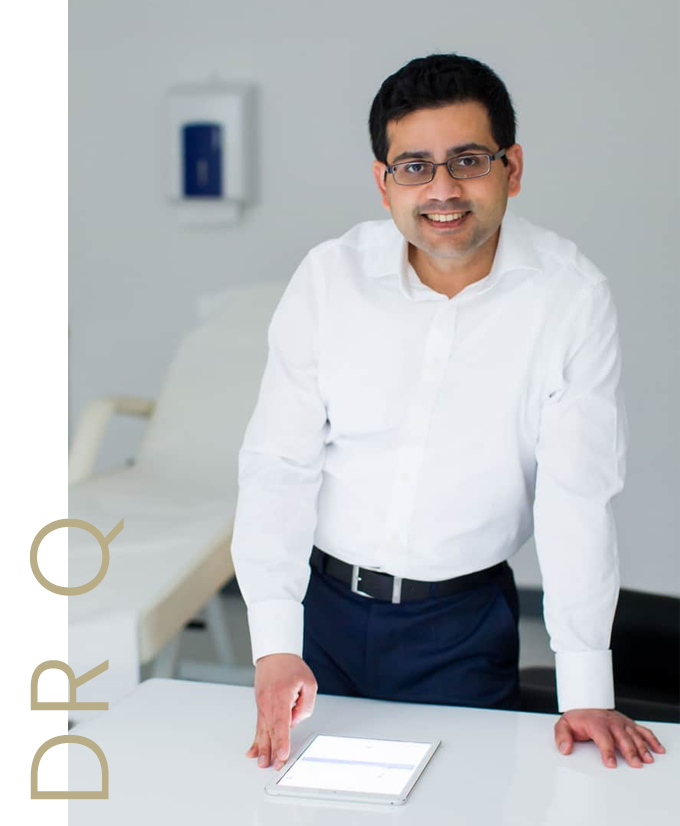
Dr Usman Qureshi (Dr Q) is a leading expert in aesthetic medicine with a 22 year career and a background spanning general practice, including A&E, and 12 years specialising in cosmetic procedures. A University of Glasgow graduate of 2002, he is the innovator behind the signature Q Lift, has performed over 20,000 procedures, and is an international speaker and trainer whose work has featured in Glamour and Harpers Bazaar.