
What Is A Skin Tightening Treatment And How Does HIFU Work?
State of the art facial skin care technology means that you don’t have to put up with ageing skin any longer. And you don’t need surgery to reduce wrinkles and fine lines. All you have to do is book an appointment for non-invasive skin tightening. So, what is a skin tightening treatment and how does it work? Find out more here…
Frequently Asked Questions
What is skin tightening?
Skin tightening uses high-intensity ultrasound energy to get rid of fat cells, causing the skin layers to contract, and new collagen and elastin to be produced. The high-energy waves penetrate through the upper skin layer without the need for cuts or stitches.
How long does it take for skin to tighten?
A single treatment can give immediate improvement as the skin is lifted. It then continues to heal and stimulate long-term tissue repair tightening and lifting the skin further. It may take up to three months for the results to fully emerge, and these can last up to one year. Facial treatments won’t be carried out more than once a year, but body treatments can be repeated after six months.
What are the benefits?
You’ll get a reduction in fine lines and wrinkles as saggy skin is lifted and tightened. Your skin will be rejuvenated giving a younger looking appearance. And it’s a procedure that’s suitable for your face, neck, and for body-slimming.
Face and neck tightening can be addressed as the ultrasound can be focused on the forehead, eyes, cheeks, chin, and jaw. Eyebrows can be lifted, bags under the eyes reduced, and double chins and jowls taken care of.
The treatment can be used to target fat cells, destroy them, and drain them out of the body through the lymphatic system. Fat reduction can be performed on the stomach, thighs, and upper arms.
Are there any side effects?
When facial skin tightening procedures are carried out by skin care professionals the side effects are minimal. And won’t stop you resuming your normal daily activities. You may have:
- Redness around the treatment site
- Swelling
- Tenderness
- A tingling sensation
A safe and effective alternative to surgery
Before your treatment you’ll need to make sure your skin is free of all substances such as make-up and oils. You’ll have a topical anaesthetic cream applied to the treatment area to avoid any discomfort during the procedure.
You’ll be asked to wear glasses to protect your eyes whilst the skin tightening takes place. The hand held device will produce short pulses of laser energy to the skin. Only minimum discomfort will be experienced during the treatment which is similar to a slight heating sensation.
Sessions normally take up to an hour as your practitioner repeats the procedure several times to get the best results. You’ll get a restoration of smoother, softer skin without any downtime. And the treatment is suitable for women and men of all skin tones as long as you’re healthy.
If you’re concerned about any medical issues you’ll need to consult your GP before you go ahead with the treatment. Your trusted skin care consultant will also go through your medical history to keep you safe.
Click here for more information about HIFU.
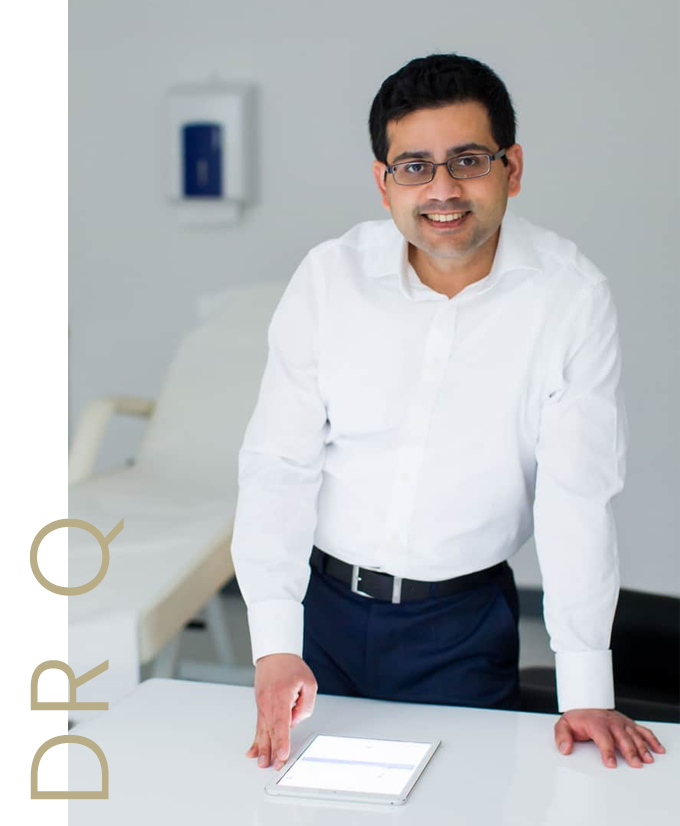
Dr Usman Qureshi (Dr Q) is a leading expert in aesthetic medicine with a 22 year career and a background spanning general practice, including A&E, and 12 years specialising in cosmetic procedures. A University of Glasgow graduate of 2002, he is the innovator behind the signature Q Lift, has performed over 20,000 procedures, and is an international speaker and trainer whose work has featured in Glamour and Harpers Bazaar.