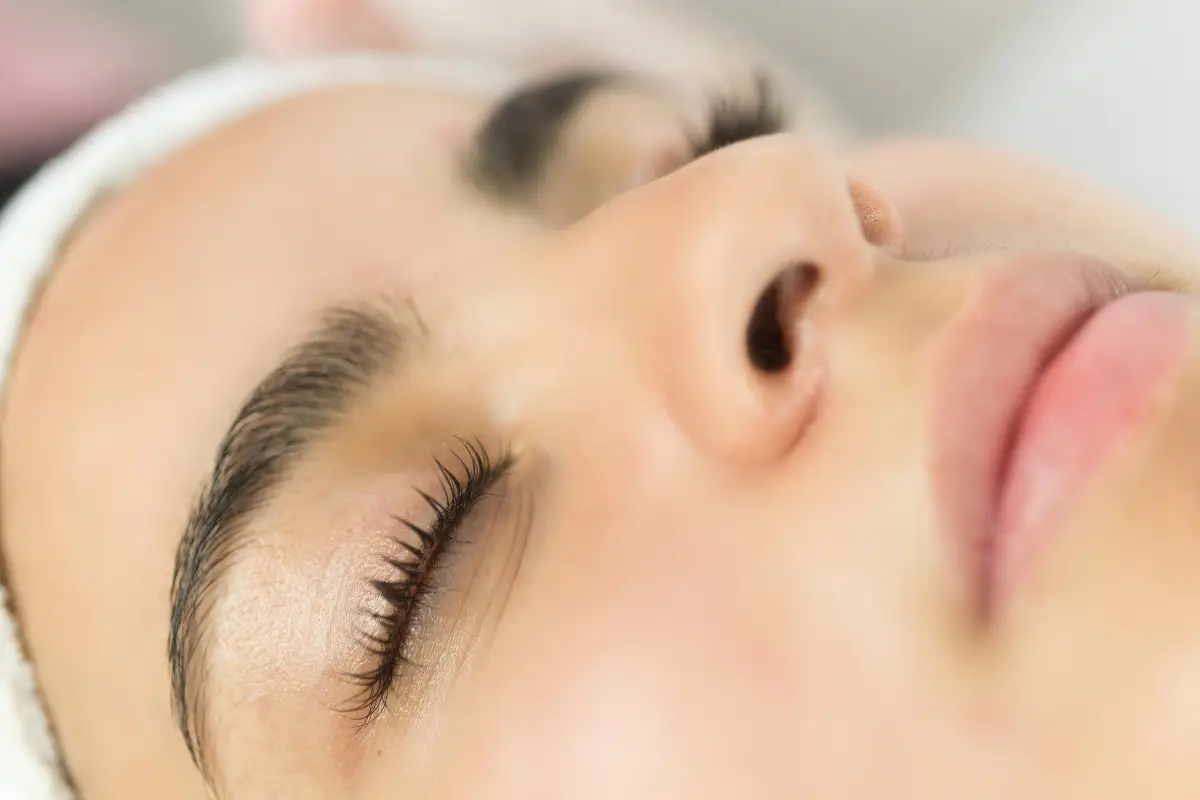
Tear trough filler is a hyaluronic acid gel placed deep under the eye, against the bone, to soften the groove that runs from the inner corner down towards the cheek. At Luxe Skin in Glasgow it sits within dermal filler treatment, from £350, and it is done by Dr Usman Qureshi after a full facial assessment rather than as a walk in appointment.
It is also the treatment we turn down most often. The under eye is the least forgiving area on the face, and a hollow that looks identical in two people can have three different causes. Filling the wrong one makes the eye look heavier, not fresher.
The short answer. Tear trough filler works well for a true hollow: a shadow cast by lost volume over the orbital rim, in someone with reasonable skin thickness and no fluid retention. It works badly for puffiness, for herniated fat pads, for pigmentation, and for anyone whose under eye swells overnight. Results usually last around nine to eighteen months. The material is reversible, which is the main reason hyaluronic acid is the only filler that belongs near the eye.
On this page
- What a tear trough actually is
- Why it starts in your thirties
- Hollow, shadow or bag: telling them apart
- What filler does, and what it cannot do
- Who it suits, and who should not have it
- What it costs in Glasgow
- What happens at the appointment
- Recovery and the results timeline
- The risks that actually matter
- When filler is the wrong answer
- Nine questions to ask before booking
- Key takeaways
- Frequently asked questions
What a tear trough actually is
The tear trough is a ligament. It is a band of fibrous tissue that tethers the skin down to the bone of the orbital rim, and it is the reason the under eye can dent while the cheek beside it stays full. You are not looking at a wrinkle. You are looking at a step between two surfaces that used to sit level with each other.
Four things create that step, and they arrive at different speeds in different people.
| What changes | What it does to the under eye | How quickly it moves |
|---|---|---|
| Bone of the orbital rim | The rim widens and drops back, so the skin above it loses its shelf and falls into shadow. | Slow. Measurable across decades rather than years. |
| The deep midface fat pads | Fat that once bridged the lid and the cheek slides down and forward, leaving a trough where the two used to meet. | Steady from the mid thirties, faster after significant weight loss. |
| Orbicularis oculi, the ring muscle | Thins and loosens, so the skin over it creases and the underlying vessels show through more. | Gradual, accelerated by heavy eye rubbing and chronic squinting. |
| Dermis and collagen | Under eye skin is roughly half a millimetre thick. As collagen drops it becomes translucent and the blue of the vasculature reads as a dark circle. | Begins in the late twenties and is the part topical products can genuinely influence. |
Only one of those four is a volume problem, and volume is the only one a syringe of filler can answer. That distinction is the whole article. If you want the wider version of it, the facial anatomy guide covers how the same logic applies across the midface.
Why it starts in your thirties
Most people expect the eye area to change in their fifties. It usually starts twenty years earlier, and it starts quietly, because the first sign is not a line but a change in how light falls on your face. You photograph worse under overhead lighting. Concealer that used to disappear now sits in a crease by lunchtime. You look tired in the morning after a full night of sleep.
The reason is that the under eye is where four separate ageing processes overlap in the smallest area of skin on the face. Elsewhere you can lose a little bone, a little fat and a little collagen and nothing shows. Here, half a millimetre of loss is a visible shadow.
| Contributing factor | What it does | Whether treatment helps |
|---|---|---|
| Genetics | Deep set eyes and a prominent orbital rim run in families. Some people have a visible trough at twenty five. | Yes, and often earlier than average, because the anatomy is the cause rather than the ageing. |
| Rapid weight loss | Midface fat is lost before body fat in many people, so the trough deepens within months. | Yes, but wait until weight has been stable for around three months. |
| Allergies and eye rubbing | Repeated mechanical trauma weakens the skin and worsens both puffiness and pigment. | Treat the allergy first. Filler placed under an eye that is rubbed daily migrates. |
| Fluid retention and sleep position | Morning puffiness that settles by midday is lymphatic, not structural. | No. Filler under a fluid problem makes the morning look worse. |
| Screen time and squinting | Sustained muscle activity and dryness, which exaggerate creasing. | Partly. Worth fixing before considering an injectable. |
Hollow, shadow or bag: telling them apart
This is the assessment that decides everything, and it takes about two minutes in front of a mirror in daylight. Look straight ahead, then tilt your chin down and look up. Then press gently on the area with a clean fingertip.
| What you see | What it usually is | Does filler help |
|---|---|---|
| A shadow that shifts or disappears when you tilt your head | A true hollow. Light is falling into a depression rather than onto a dark surface. | Yes. This is the case tear trough filler is designed for. |
| A brown or grey tint that stays the same at every angle | Pigmentation, often post inflammatory or genetic, common in deeper skin tones. | No. Filler under pigment leaves you with the same colour on a flatter surface. |
| A soft bulge above the trough that is worse in the morning | Fluid. It follows salt, alcohol, sleep and the menstrual cycle. | No. Wait, change what you can, and reassess in the afternoon. |
| A firm bulge that does not change through the day and is more obvious when you look up | A herniated orbital fat pad. The lid fat has pushed forward through a weakened septum. | No, and this is the one that gets made worse. It is a surgical question, for an oculoplastic surgeon. |
| Fine crepey lines with good underlying volume | Skin quality, not structure. | No. Skin treatments are the answer here, not volume. |
If reading that table leaves you fairly sure you have a fat pad rather than a hollow, that is useful information and it is worth having confirmed. We will say so at consultation, and there is no charge for being told the answer is no.
What filler does, and what it cannot do
The gel is placed deep, on the periosteum, which is the membrane over the bone. Done properly, it is not “filling the line”. It is rebuilding a shelf underneath so that the skin above no longer falls into shadow. The volumes are small: a fraction of a millilitre per side is normal, and the difference between an under eye that looks rested and one that looks puffy is often two tenths of a millilitre.
What it does well
- Softens a genuine hollow so the lid and the cheek read as one continuous surface again.
- Reduces the shadow that makes concealer look grey rather than skin coloured.
- Improves the transition at the outer corner where the trough meets the cheekbone.
- Buys time. It does not stop the underlying loss, but it delays the point at which that loss becomes obvious.
What it does not do
- It does not lighten pigment. A brown circle stays brown.
- It does not tighten skin. Crepey texture is unchanged or slightly more obvious.
- It does not remove a fat pad. Placing gel below a bulge accentuates the bulge.
- It does not treat puffiness, and it holds water, so an eye that already swells will swell more.
The material matters as much as the placement. Only a firm, low water binding hyaluronic acid belongs here. The filler materials guide explains why the softer, more hydrophilic gels used in lips are the wrong choice under the eye, and why nothing permanent should ever be used in this area. The NHS guidance on dermal fillers is worth reading before any injectable appointment, wherever you have it done.
The commonest reason an under eye looks worse after filler is not too much product. It is the right product in the wrong patient.
Who it suits, and who should not have it
Here is our position, stated plainly, because most pages on this subject will not give you one.
Good candidates
- People aged roughly 30 to 55 with a shadowed hollow, reasonable skin thickness and no morning swelling.
- People with a genetically prominent orbital rim who have had the same shadow since their twenties.
- People whose midface volume has dropped after weight loss, once weight has been stable for around three months.
- People who have already had cheek support treated, or are willing to have it treated first, because a supported cheek does half the work.
Poor candidates, in our view
- Anyone whose under eye is puffier at 8am than at 6pm. Fluid and filler are a bad combination.
- Anyone with a firm, unchanging bulge above the trough. That is fat herniation and it needs a surgical opinion.
- Anyone whose concern is colour rather than contour.
- Anyone with very thin, translucent skin who can see the vessels clearly. The risk of a bluish tint through the skin, called the Tyndall effect, is highest here.
- Anyone with an active skin infection, an autoimmune flare, or who is pregnant or breastfeeding.
If you fall into the second list, that is not the end of the conversation. It changes which treatment is appropriate, and the alternatives section below covers what usually replaces it.
What it costs in Glasgow
At Luxe Skin, tear trough treatment is priced within dermal fillers, which start from £350. The exact figure depends on how much product the assessment calls for and whether the cheek needs support at the same visit, which it often does. Every current figure is published on the price guide rather than quoted only in the room.
| What you are paying for | At Luxe Skin | Worth knowing |
|---|---|---|
| Dermal filler treatment, tear trough included | From £350 | Assessment first. If the answer is that filler is wrong for you, we say so before anything is booked. |
| Cheek or midface support at the same appointment | Priced within dermal fillers, from £350 | Supporting the cheek often reduces how much product the trough itself needs. |
| Morpheus8 for skin quality around the eye | From £400 | For crepey texture and laxity rather than hollowing. Usually a course. |
| Laser skin resurfacing | From £500 | For texture and pigment. Not a volume treatment. |
| Q Plan membership | See the membership page | Spreads maintenance across the year rather than paying per visit. |
Be careful with prices well below this range. Under eye work is the single most technically demanding injectable on the face, and the cost difference between a cheap appointment and a careful one is far smaller than the cost of dissolving and starting again.
What happens at the appointment
- Assessment. Facial history, medical history, medication and any previous filler anywhere on the face. Old product migrates, and product placed elsewhere years ago can still be sitting under the eye.
- The light test. Assessment in different lighting and at different head positions, to separate hollow from pigment from fluid. Photographs at fixed angles for comparison later.
- The plan, including the option of not treating. If the cheek needs support first, that is said before anything is agreed.
- Cleansing and marking. The area is cleaned thoroughly and the entry points and danger zones are marked.
- Placement. A blunt cannula is generally preferred here rather than a needle, entering from a single point near the outer cheek. It moves through tissue rather than cutting across it, which reduces bruising and lowers the chance of entering a vessel.
- Review in the room. Sitting upright, both sides compared, small adjustment if needed. Under filling deliberately at the first visit is the correct approach.
- Aftercare and a review date. Two to four weeks later, once swelling has fully settled, because that is the first point at which the result can be judged at all.
A first appointment usually runs around forty five minutes to an hour, most of which is assessment rather than injecting. If this is your first injectable of any kind, the guide for nervous first timers covers what the room and the process are like.
Recovery and the results timeline
| When | What is normal | What is not |
|---|---|---|
| First 24 hours | Small raised areas, mild tenderness, sometimes a pinpoint bruise at the entry site. | Severe pain, blanching or mottling of the skin, or any change in vision. Contact the clinic immediately. |
| Days 2 to 7 | Bruising if it appears, usually at the cannula entry point. Some puffiness that comes and goes. | Spreading redness, heat, or a bruise that is growing rather than fading. |
| Weeks 2 to 4 | Swelling resolves and the true result becomes visible. This is the review appointment. | A visible ridge, a bluish tint, or an area that is fuller in the morning than it was before treatment. |
| Months 9 to 18 | Gradual softening as the gel is broken down. Many people top up once a year. | Sudden change, lumps appearing months later, or new swelling after an illness or a dental procedure. |
Aftercare that actually matters
- No make up on the area for 12 hours, and no touching or massaging it at all.
- Sleep on your back with an extra pillow for the first two nights.
- Skip the gym, hot yoga, saunas and alcohol for 48 hours. All of them increase swelling and bruising.
- Avoid facials, microneedling and laser over the area for two weeks.
- Book the review. A result judged at day three is not a result, it is swelling.
The risks that actually matter
Under eye filler carries a different risk profile from lips or cheeks, and it is worth being specific rather than reassuring.
Vascular occlusion, the one that is an emergency
Filler entering or compressing a blood vessel blocks blood supply to the tissue it feeds. Near the eye, the relevant vessels connect to the retinal circulation, which is why this area is treated with more caution than any other on the face. It is rare. It is also why the injector, the technique and the presence of an emergency protocol matter more here than anywhere else on the face.
Call the clinic immediately, the same day, if you have any of these: pain that is severe or increasing rather than settling, skin that turns white, grey or mottled, a bluish or dusky patch, or any change in vision at all. Do not wait to see whether it improves overnight. Hyaluronic acid filler can be dissolved with hyaluronidase, and the outcome depends heavily on how quickly that happens.
The Tyndall effect
Gel placed too superficially under thin skin scatters light and shows through as a bluish grey line. It is not a bruise and it does not fade. It is corrected by dissolving the product, which is the strongest practical argument for using a reversible hyaluronic acid here and nothing else.
Migration and long term puffiness
Hyaluronic acid attracts water. In an area with poor lymphatic drainage, product placed over enthusiastically can leave a permanent looking puffiness that patients often mistake for their own ageing. We see this regularly in people who have had repeated small top ups elsewhere without the previous product ever being assessed. The same pattern is described in the marionette lines article, where stacking filler over an unaddressed structural problem makes the face heavier year on year.
When filler is the wrong answer
If the assessment says the hollow is not the problem, these are the routes that usually replace it.
| The concern | What to do instead | At Luxe Skin |
|---|---|---|
| Crepey, thin skin with good volume | Collagen stimulation rather than volume, usually over a course. | Morpheus8 from £400, or the microneedling guide for the wider picture. |
| Pigmentation and dark colouring | Resurfacing and pigment focused treatment, plus daily sun protection. | Laser skin resurfacing from £500. |
| Skin quality and early laxity, no clear hollow | Regenerative treatment aimed at the tissue rather than the shape. | Polynucleotides and PRP or exosome therapy are covered in our treatment guides. Suitability is decided at consultation. |
| A firm bulge that does not change through the day | An oculoplastic surgical opinion. This is outside what any injectable can fix. | We refer rather than treat. |
| Morning puffiness only | Sleep position, salt, alcohol, allergy management, then reassess in three months. | No treatment. Come back if it persists in the afternoon. |
It is common to leave a consultation with a plan that starts somewhere other than the under eye. Supporting the cheek first is the most frequent version of that. The ninety day treatment plan article and the ranked guide to anti ageing treatments in Glasgow both set out how the sequencing usually works.
Nine questions to ask before booking
- Is my under eye a hollow, a fat pad, pigment or fluid, and how did you decide?
- Are you injecting the tear trough itself, or supporting the cheek first?
- Which product are you using, and why that one under the eye specifically?
- Needle or cannula, and what is your reasoning?
- How much product do you expect to use per side?
- Do you keep hyaluronidase on the premises, and what is your protocol if something goes wrong?
- What are your medical qualifications and how long have you been injecting this area?
- When is the review appointment and is it included?
- What happens, and what does it cost, if I do not like the result?
An injector who welcomes those questions is the one you want. For context on ours, Dr Usman Qureshi has more than twenty years of medical experience including an accident and emergency background, more than twelve years working as a cosmetic doctor and more than 20,000 procedures performed.
Key takeaways
- A tear trough is a tethering ligament over a bony rim, not a wrinkle. Only volume loss responds to filler.
- Tilt your head. A shadow that moves is a hollow. A colour that does not move is pigment.
- Morning puffiness and firm bulges are the two presentations that get worse with filler.
- Small volumes, placed deep, reviewed at two to four weeks. Under filling first is correct.
- From £350 within dermal fillers at Luxe Skin. Results usually last nine to eighteen months.
- Only reversible hyaluronic acid belongs under the eye, and only with an injector who has a plan for when something goes wrong.
If you want an answer on which of the five presentations above you actually have, that is what the consultation is for. Luxe Skin is at 227 Ingram Street, Glasgow G1 1DA, and the clinic can be reached on 0141 573 1473 or through the contact page.
Frequently asked questions
How long does tear trough filler last?
Usually nine to eighteen months. The under eye moves less than the mouth, so product tends to last longer here than in the lips, and many people come back once a year rather than twice.
Does tear trough filler hurt?
Most people describe pressure rather than pain. Topical numbing cream is used, the product itself generally contains local anaesthetic, and a cannula avoids most of the sharp sensation. The area is more tender for a day afterwards than it is during the appointment.
Will it get rid of my dark circles?
Only if the darkness is a shadow. Tilt your head back and look in a mirror: if the darkness lightens, it is a shadow and filler will help. If the colour stays exactly the same, it is pigment, and the answer is resurfacing and sun protection rather than volume.
Can tear trough filler be dissolved?
Yes. Hyaluronic acid filler is broken down with hyaluronidase, usually within a day or two of the injection. That reversibility is the reason no permanent or semi permanent material should ever be placed under the eye.
Why do some people look puffy after tear trough filler?
Three usual causes: too much product, product placed too superficially, or product placed in someone whose under eye already retained fluid. Hyaluronic acid binds water, so an area that swells will swell more. It is corrected by dissolving rather than by adding more.
How much does tear trough filler cost in Glasgow?
At Luxe Skin it is priced within dermal filler treatment, from £350, with the final figure depending on how much product the assessment calls for and whether the cheek is supported at the same visit. Current prices are published on the price guide.
Am I too young for tear trough filler?
Age is not the deciding factor, anatomy is. People with a genetically prominent orbital rim can have a visible trough in their twenties, and they are often better candidates than someone twenty years older with fluid retention. The assessment decides, not the birthday.
What is the difference between tear trough filler and under eye blepharoplasty?
Filler adds support beneath a hollow and is reversible. Blepharoplasty is surgery that removes or repositions herniated fat and excess skin. If your bulge is firm and unchanging through the day, surgery is the relevant conversation and we will refer you rather than inject.
Related reading
- What dermal fillers are and how they work
- Dermal fillers compared: hyaluronic acid, calcium hydroxylapatite and poly L lactic acid
- Facial anatomy and why structure decides the result
- Marionette lines filler gone wrong, and how to fix it
- Microneedling in Glasgow: how it works and who it suits
- Polynucleotides for skin rejuvenation
- All face treatments at Luxe Skin

Dr Usman Qureshi (Dr Q) is a leading expert in aesthetic medicine with a 22 year career and a background spanning general practice, including A&E, and 12 years specialising in cosmetic procedures. A University of Glasgow graduate of 2002, he is the innovator behind the signature Q Lift, has performed over 20,000 procedures, and is an international speaker and trainer whose work has featured in Glamour and Harpers Bazaar.