Introduction: The Foundation of Aesthetic Excellence
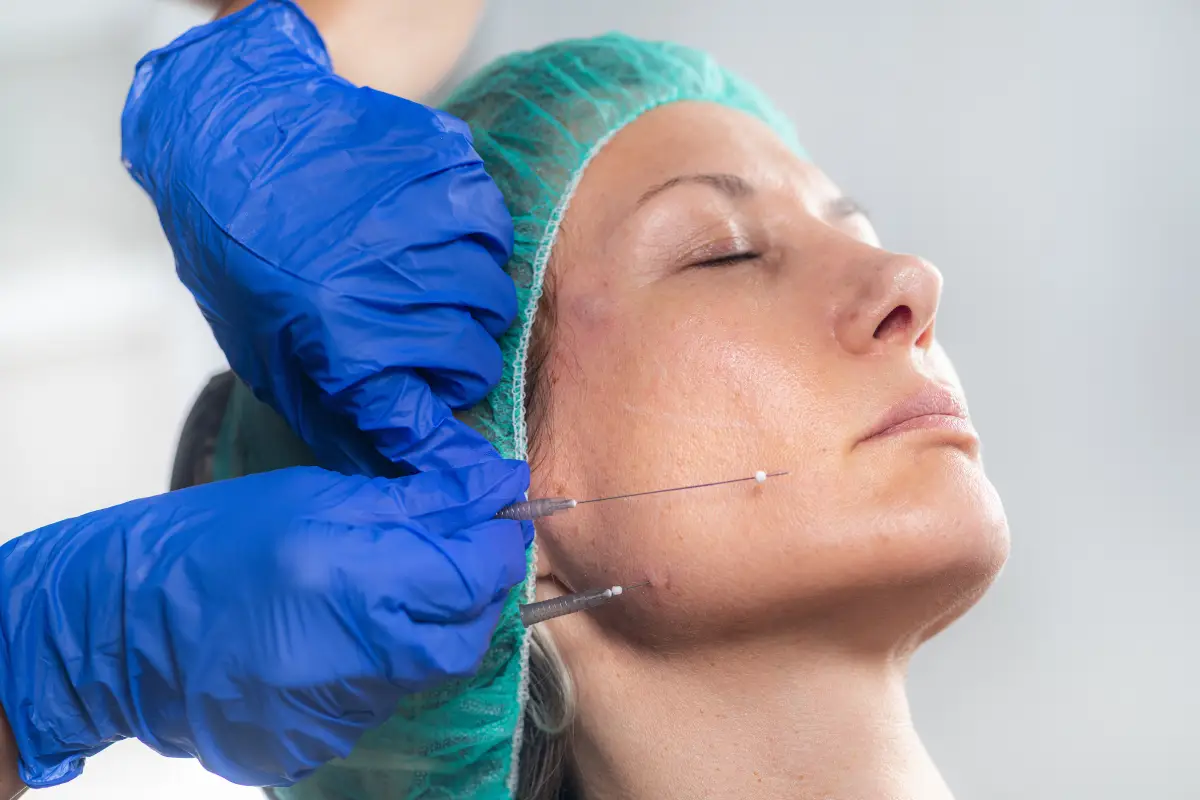
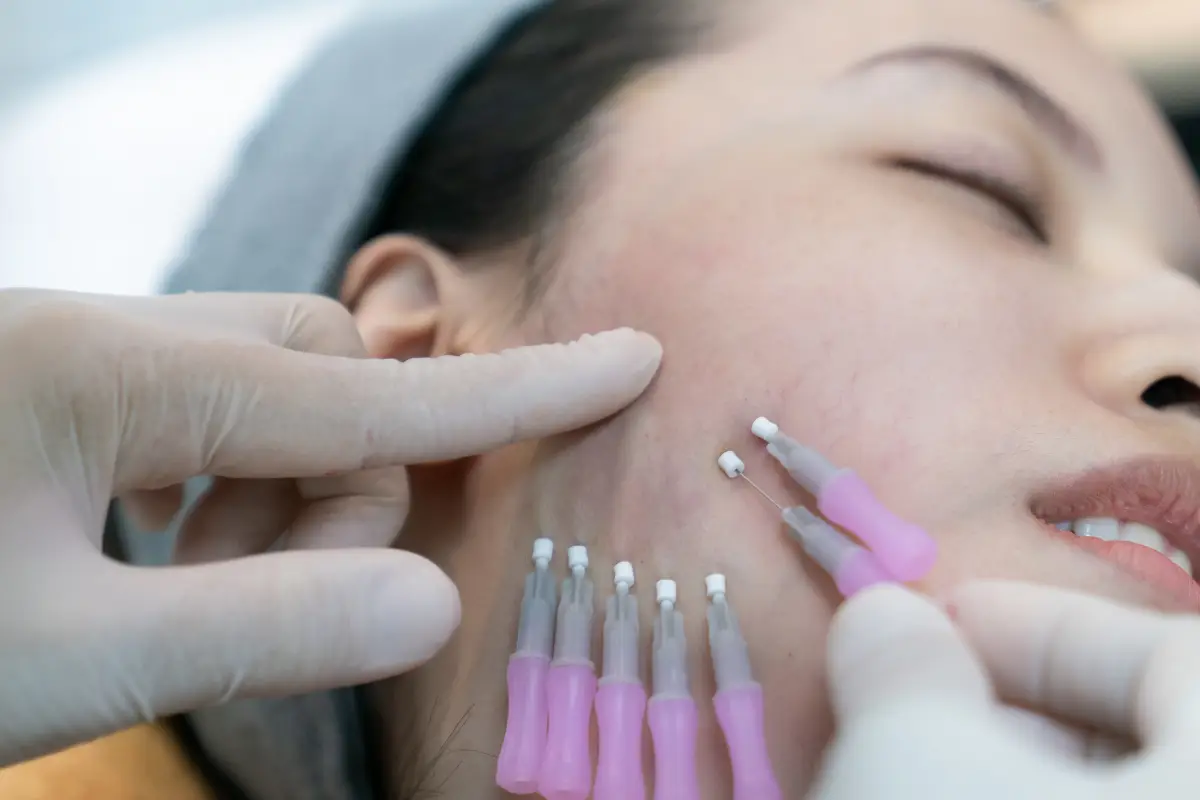
In the world of aesthetic medicine, the difference between good results and exceptional ones often lies not in the products or techniques used, but in the practitioner’s understanding of facial anatomy. While many clinics focus their marketing on specific treatments or brands, at Luxe Skin by Dr Q in Glasgow, we believe that true artistry in facial aesthetics begins with a profound respect for and knowledge of the underlying anatomical structures.
This guide sets out why what lies under the skin decides whether an aesthetic treatment is safe and whether it looks like anything. We’ll take you through the complex layers of the face, explain how they interact, and reveal how Dr Q’s anatomical approach ensures both safety and superior aesthetic outcomes for every patient.
The argument running through it is that a face is one connected structure, so treating a line without reading what is happening underneath it is how people end up looking altered rather than rested.
The Layered Complexity of Facial Anatomy
The face is far more complex than what we see in the mirror, comprising multiple tissue layers that interact in sophisticated ways.
The Five Fundamental Layers
Understanding facial anatomy begins with recognising its layered structure:
Layer 1: Skin (Epidermis and Dermis)
•Epidermis: Protective outer barrier (0.05-1.5mm thick)
•Dermis: Supportive layer containing collagen and elastin (0.5-3mm thick)
•Regional variations in thickness (thinnest around eyes, thickest on back)
•Contains sebaceous glands, sweat glands, and hair follicles
•First visible sign of ageing through textural and pigmentary changes
Layer 2: Subcutaneous Fat
•Superficial fat compartments arranged in distinct anatomical units
•Provides volume, contour, and insulation
•Contains superficial neurovascular structures
•Varies significantly in thickness across facial regions
•Diminishes with age in specific patterns
Layer 3: SMAS (Superficial Musculoaponeurotic System)
•Fibromuscular layer connecting facial muscles to skin
•Allows for coordinated facial expressions
•Provides structural support for overlying tissues
•Continuous sheet with regional specialisations
•Primary target of surgical facelift procedures
Layer 4: Deep Fat Compartments
•Distinct from superficial fat compartments
•Provides structural support and cushioning
•Surrounds the neurovascular structures
•Maintains relatively stable volume with ageing
•Critical for facial movement mechanics
Layer 5: Periosteum and Bone
•Periosteum: Fibrous covering of facial bones
•Provides attachment for deep muscles and ligaments
•Contains osteoblasts for bone remodelling
•Facial skeleton determines fundamental facial shape
•Undergoes remodelling and resorption with age
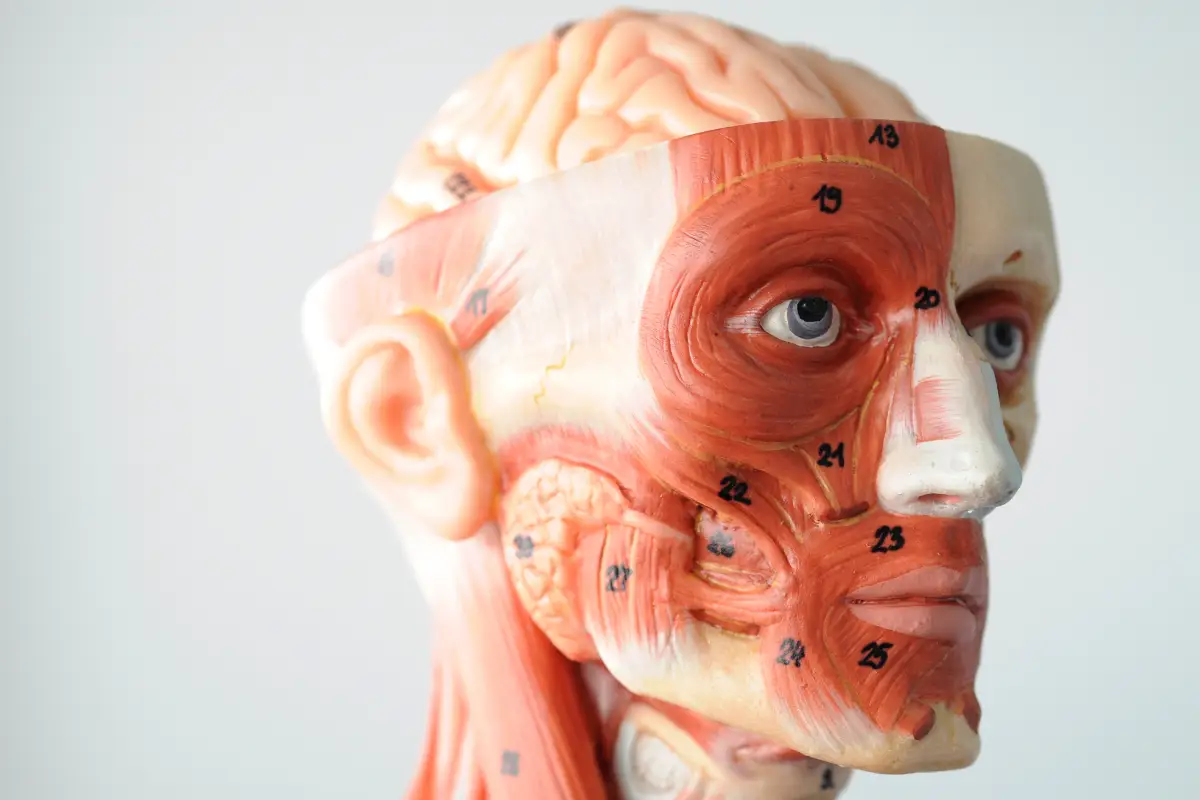
The Facial Musculature System
Facial muscles create our expressions and influence aesthetic outcomes:
Muscles of the Upper Face:
•Frontalis: Elevates eyebrows, creates horizontal forehead lines
•Corrugator supercilii: Draws eyebrows medially, creates vertical glabellar lines
•Procerus: Pulls medial eyebrows downward, creates horizontal nasal lines
•Orbicularis oculi: Circular muscle surrounding eye, creates crow’s feet
•Depressor supercilii: Pulls eyebrows downward and medially
Muscles of the Midface:
•Levator labii superioris: Elevates upper lip and nasal ala
•Zygomaticus major and minor: Elevate corners of mouth in smiling
•Levator anguli oris: Elevates angle of mouth
•Nasalis: Compresses nasal aperture, creates “bunny lines”
•Orbicularis oris: Circular muscle surrounding mouth, controls lip movement
Muscles of the Lower Face:
•Depressor anguli oris: Pulls corners of mouth downward
•Depressor labii inferioris: Pulls lower lip downward
•Mentalis: Elevates and protrudes lower lip and chin
•Risorius: Pulls corner of mouth laterally in smiling
•Platysma: Broad sheet muscle of neck, creates vertical neck bands
Muscles of Mastication:
•Masseter: Powerful jaw closing muscle, contributes to square jaw appearance
•Temporalis: Fan-shaped muscle assisting in jaw closure
•Pterygoids: Control side-to-side jaw movement
•Buccinator: Compresses cheek, assists in chewing
The Critical Vascular Network
Understanding blood supply is essential for safe aesthetic procedures:
Arterial Supply:
•External carotid artery: Primary blood supply to face
•Facial artery: Major supplier to lower and mid-face
•Superficial temporal artery: Supplies lateral face and temple
•Infraorbital artery: Supplies lower eyelid and cheek
•Supratrochlear and supraorbital arteries: Supply forehead
•Angular artery: Critical vessel near nasal region
Danger Zones and Vascular Considerations:
•Glabellar region: High risk due to supratrochlear artery
•Nasolabial fold: Facial artery traverses this region
•Temple: Superficial temporal artery vulnerability
•Infraorbital foramen: Exit point of infraorbital artery
•Alar base: Terminal branches of facial artery
•Lips: Superior and inferior labial arteries
Venous Drainage:
•Facial vein: Parallels facial artery
•Superficial temporal vein: Drains lateral face
•Angular vein: Connects with ophthalmic system
•Retromandibular vein: Drains parotid region
•Pterygoid plexus: Complex network behind maxilla
•Potential for retrograde flow into ophthalmic system
The Neural Framework
Facial nerve anatomy dictates both function and aesthetic considerations:
Motor Innervation:
•Facial nerve (CN VII): Primary motor supply to facial muscles
•Five main branches: temporal, zygomatic, buccal, marginal mandibular, cervical
•Temporal branch: Vulnerable during temple injections
•Marginal mandibular branch: At risk during jawline treatments
•Buccal branch: Controls mid-face movement
•Depth of travel varies across face
Sensory Innervation:
•Trigeminal nerve (CN V): Primary sensory nerve of face
•Three divisions: ophthalmic (V1), maxillary (V2), mandibular (V3)
•Supraorbital and supratrochlear nerves: Forehead sensation
•Infraorbital nerve: Cheek and upper lip sensation
•Mental nerve: Lower lip and chin sensation
•Zygomaticotemporal nerve: Lateral cheek sensation
Autonomic Innervation:
•Controls glandular secretion and blood vessel tone
•Sympathetic fibers: Vasoconstriction and sweat production
•Parasympathetic fibers: Glandular secretion
•Travels alongside sensory and motor nerves
•Contributes to healing response after treatments
Facial Support Structures
The face’s structural integrity depends on key supporting elements:
Ligaments and Retaining Systems:
•Zygomatic ligaments: Support mid-face tissues
•Masseteric ligaments: Support lower face
•Mandibular ligaments: Support jawline
•McGregor’s patch: Supports midcheek
•Orbital retaining ligament: Supports lower eyelid
•Platysma-auricular ligament: Supports neck tissues
Facial Spaces and Compartments:
•Superficial fat compartments: Distinct anatomical units
•Deep fat compartments: Structural support
•Potential spaces: Allow for tissue movement
•Fascial planes: Separate functional units
•Retaining ligaments: Connect skin to deeper structures
•Age-related changes in compartment volume
“Understanding facial anatomy isn’t just about memorising structures. It’s about comprehending how these structures interact dynamically during expression, ageing, and in response to treatments. This integrated understanding is what allows for truly natural-looking results.” Dr Q, Luxe Skin by Dr Q
Facial Proportions and Aesthetic Ideals
Beyond individual structures, facial aesthetics depends on proportional relationships and balance.
Classical Facial Proportions
Timeless principles of facial harmony:
Vertical Proportions:
•Face divides into thirds: hairline to glabella, glabella to subnasale, subnasale to menton
•Lower third further divides: upper lip (1/3) and lower lip/chin (2/3)
•Eye position approximately at midpoint of facial height
•Ear height typically aligns with eyebrow to nasal base
•Chin-to-neck distance ideally similar to nose-to-chin distance
Horizontal Proportions:
•Face width approximately 5 eye widths
•Intercanthal distance equals one eye width
•Mouth width aligns with medial limbus or iris
•Nasal width approximately equal to intercanthal distance
•Bitemporal width creates frame for central features
The Rule of Fifths:
•Face divides horizontally into five equal segments
•Each segment approximately equal to one eye width
•First and fifth segments: temples to lateral canthus
•Second and fourth segments: lateral canthus to nasal ala
•Middle segment: width of nose
The Golden Ratio (1:1.618):
•Mathematical proportion found throughout nature
•Applied to relationships between facial features
•Examples include:
•Width-to-height ratio of the face
•Upper-to-lower lip ratio
•Philtrum-to-chin ratio
•Nasal length-to-tip projection
Gender-Specific Anatomical Differences
Understanding how male and female faces differ structurally:
| Feature | Female Characteristics | Male Characteristics | Aesthetic Implications |
| Forehead | Rounded, vertical | Sloped, prominent brow ridge | Influences upper face treatment approach |
| Eyebrows | Arched, positioned above orbital rim | Straight, at level of orbital rim | Affects neurotoxin pattern and filler placement |
| Cheekbones | Higher, more prominent | Lower, less prominent | Determines optimal cheek enhancement strategy |
| Jawline | Narrower, more tapered | Wider, more angular | Guides jawline contouring techniques |
| Chin | Smaller, more pointed | Larger, more square | Influences chin augmentation approach |
| Nose | Smaller, concave profile | Larger, straight/convex profile | Affects nasal contouring strategy |
| Lips | Fuller, more defined cupid’s bow | Thinner, less defined | Determines lip enhancement techniques |
| Skin | Thinner, less sebaceous | Thicker, more sebaceous | Influences treatment intensity and approach |
Ethnic Variations in Facial Anatomy
Recognising and respecting anatomical diversity:
Caucasian Facial Features:
•Prominent nasal bridge
•Less prominent cheekbones
•Thinner lips on average
•More prominent nasolabial folds
•Earlier onset of skin laxity
•Deeper set eyes
East Asian Facial Features:
•Wider facial width
•More prominent cheekbones
•Flatter nasal bridge
•Epicanthal folds
•Thicker skin with more sebaceous activity
•Later onset of skin laxity
African/Afro-Caribbean Facial Features:
•Wider nasal base
•Fuller lips
•Less prominent nasolabial folds
•Higher cheekbones
•Thicker skin with more sebaceous activity
•Later onset of skin laxity
South Asian Facial Features:
•Wider facial width
•More prominent nasal dorsum
•Increased periorbital pigmentation
•Midface projection
•Variable skin thickness
•Earlier onset of hyperpigmentation
Middle Eastern Facial Features:
•Prominent nasal profile
•Strong jawline
•Well-defined cheekbones
•Almond-shaped eyes
•Thicker skin in some regions
•Earlier onset of skin laxity in some regions
Age-Related Anatomical Changes
How facial anatomy transforms throughout life:
20s to 30s:
•Early collagen and elastin degradation begins
•Subtle volume loss in deep fat compartments
•Initial formation of dynamic expression lines
•Minimal bone resorption
•Skin texture and tone changes begin
•Early photoaging appears in sun-exposed areas
40s to 50s:
•Significant collagen and elastin loss
•Noticeable volume loss in specific fat compartments
•Descent of malar fat pad
•Deepening of nasolabial folds
•Early jowl formation
•Bone resorption becomes noticeable
•Static wrinkles develop from dynamic lines
60s and Beyond:
•Substantial volume loss throughout face
•Significant tissue descent
•Marked bone resorption, especially around orbit
•Redistribution of fat compartments
•Thinning of all tissue layers
•Loss of structural support
•Changes in facial proportions and contours
Dr Q’s Anatomical Approach to Facial Aesthetics
Understanding how anatomical knowledge translates to superior clinical outcomes.
The Structural Foundation Philosophy
Dr Q’s approach begins with understanding the face as an integrated system:
Comprehensive Assessment:
•Evaluation of all five tissue layers
•Analysis of proportional relationships
•Assessment of dynamic movement patterns
•Consideration of underlying bone structure
•Evaluation of skin quality and texture
•Integration of patient’s aesthetic goals
Structural Prioritisation:
•Address foundational issues before surface concerns
•Restore volume loss before addressing lines and wrinkles
•Consider impact of bone structure on overall appearance
•Evaluate ligamentous support and tissue positioning
•Assess muscular patterns and their effect on appearance
•Create treatment plan that respects anatomical reality
Balanced Rejuvenation:
•Maintain natural facial proportions
•Respect ethnic and gender-specific anatomical variations
•Create harmony between facial thirds
•Ensure symmetry while preserving natural asymmetry
•Maintain appropriate projection and contour relationships
•Preserve natural animation and expression
Anatomical Mapping for Precision Treatments
How detailed anatomical knowledge guides treatment planning:
Facial Analysis Process:
1.Standardised photography from multiple angles
2.Marking of key anatomical landmarks
3.Assessment of static and dynamic features
4.Identification of structural deficiencies
5.Mapping of ideal proportional relationships
6.Creation of individualised treatment blueprint
Key Anatomical Landmarks:
•Trichion: Hairline at midpoint of forehead
•Glabella: Most prominent point between eyebrows
•Nasion: Deepest point of nasal bridge
•Subnasale: Junction between columella and upper lip
•Stomion: Junction between upper and lower lips
•Menton: Most inferior point of chin
•Gonion: Angle of mandible
•Zygion: Most lateral point of zygomatic arch
Danger Zone Mapping:
•Identification of high-risk vascular areas
•Marking of nerve pathways and exit points
•Recognition of depth variations across face
•Awareness of anatomical variations
•Planning of safe injection techniques
•Alternative approaches for high-risk areas
Layer-Specific Treatment Strategies
How treatments are tailored to specific anatomical layers:
Skin Layer Interventions:
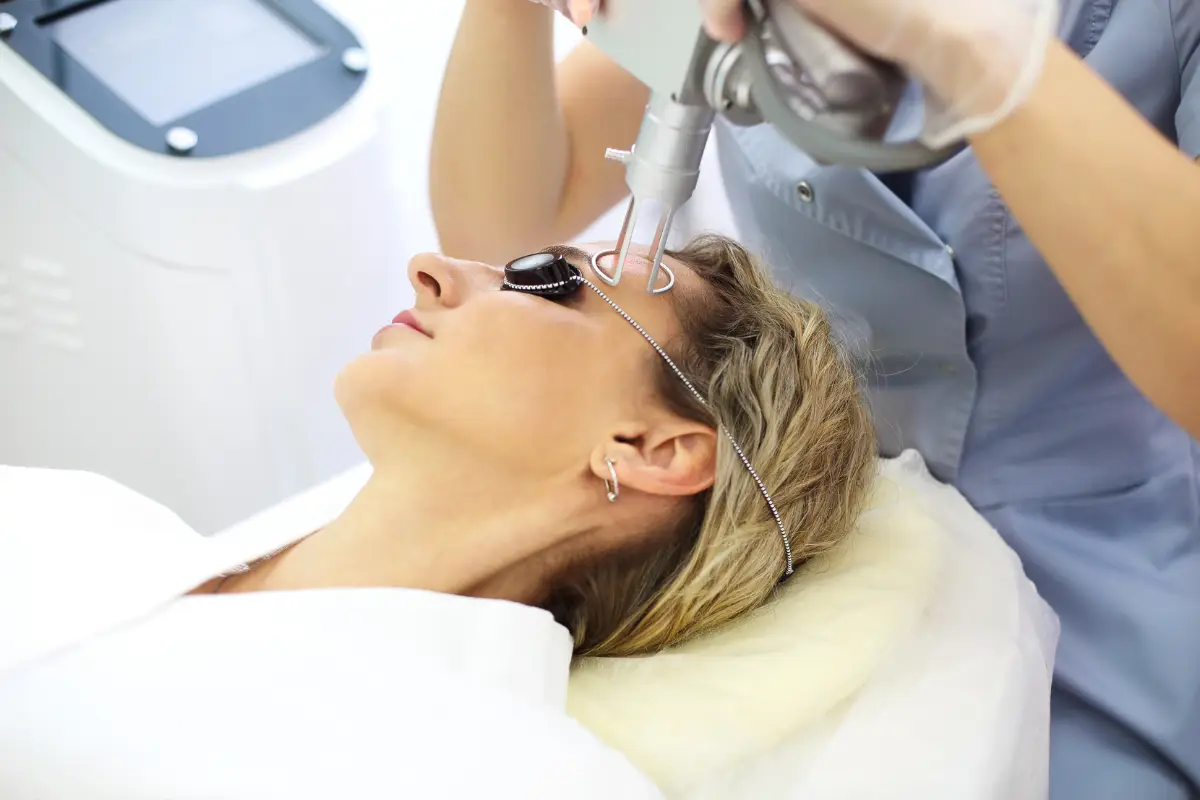
•Chemical peels: Controlled exfoliation of epidermis and dermis
•Microneedling: Creation of controlled micro-injuries to stimulate collagen
•Laser resurfacing: Targeted removal of damaged skin layers
•Radiofrequency: Thermal stimulation of collagen production
•Topical actives: Ingredients that penetrate to specific skin depths
•Combination approaches for comprehensive skin rejuvenation
Subcutaneous Fat Layer Strategies:
•Strategic filler placement in superficial fat compartments
•Restoration of age-related volume loss
•Enhancement of natural contours
•Respect for compartment boundaries
•Avoidance of overfilling and migration
•Layered approach for natural integration
SMAS Layer Considerations:
•Neurotoxin treatment of specific muscle groups
•Understanding of muscular interplay and compensation
•Preservation of natural animation
•Targeted treatment of hyperkinetic muscles
•Balance between opposing muscle groups
•Respect for functional requirements
Deep Structural Approaches:
•Deep plane filler placement for structural support
•Restoration of deep fat compartment volume
•Enhancement of bony landmarks
•Creation of structural framework
•Support for overlying tissues
•Foundation for overall facial harmony
The Vascular Safety Protocol
How anatomical knowledge prevents complications:
Pre-Treatment Assessment:
•Detailed mapping of facial vasculature
•Identification of individual anatomical variations
•Recognition of previous surgical alterations
•Assessment of previous filler placements
•Evaluation of danger zones specific to patient
•Planning of safe injection pathways
Technical Safety Measures:
•Aspiration before injection in high-risk areas
•Use of cannulas in vascular danger zones
•Small bolus technique with slow injection
•Depth awareness based on anatomical layer
•Avoidance of perpendicular needle approach to vessels
•Recognition of early vascular compromise signs
Emergency Protocols:
•Immediate recognition of vascular events
•Hyaluronidase accessibility and dosing protocol
•Vasodilation and blood flow enhancement techniques
•Oxygen therapy preparation
•Referral network for emergency management
•Regular team training for complication management
Why this matters in a consultation: an assessment that explains the bone structure, fat compartments and muscle behaviour behind what you are seeing gives you something to judge the recommendation against. It is a reasonable thing to ask for, and it is the difference between a plan built around your own anatomy and a standard set of injection points applied to everyone.
Facial Planes and Proportions: The Blueprint for Natural Results
Understanding the geometric relationships that create facial harmony.
The Three-Dimensional Facial Framework
Visualising the face as a series of interconnected planes:
Primary Facial Planes:
•Frontal (coronal) plane: Divides face into anterior and posterior
•Sagittal plane: Divides face into right and left halves
•Transverse (axial) plane: Divides face into superior and inferior
•Frankfort horizontal plane: From inferior orbital rim to superior auditory canal
•Camper’s plane: From ala of nose to superior auditory canal
•Aesthetic planes: Modified versions for optimal aesthetic outcomes
Projection Relationships:
•Glabella projection: Determines forehead contour
•Nasal projection: Relationship to facial plane
•Malar projection: Cheekbone prominence
•Mandibular projection: Chin position relative to other structures
•Lip projection: Relationship to E-line and aesthetic plane
•Cervical projection: Neck-chin relationship
Angle Assessments:
•Nasofrontal angle: Typically 115-130 degrees
•Nasolabial angle: Typically 90-120 degrees (gender-specific)
•Mentocervical angle: Typically 80-95 degrees
•Gonial angle: Typically 120-130 degrees
•Facial convexity angle: Typically 165-175 degrees
•Nasomental angle: Typically 120-132 degrees
The Mathematics of Beauty
How numerical relationships influence aesthetic perception:
Key Proportional Relationships:
•Facial height to width ratio: Ideally 1.618:1 (golden ratio)
•Rule of thirds: Equal vertical facial divisions
•Rule of fifths: Equal horizontal facial divisions
•Nasal length: Ideally 0.67 of middle third height
•Lip height: Upper to lower lip ratio ideally 1:1.618
•Chin height: Ideally 0.55 of lower third height
Symmetry Considerations:
•Perfect symmetry vs. natural asymmetry
•Perception of symmetry more important than mathematical symmetry
•Key symmetry landmarks: pupils, nasal base, oral commissures
•Acceptable asymmetry thresholds
•Impact of dynamic movement on symmetry perception
•Correction strategies for noticeable asymmetry
Neoclassical Canons:
•Orbital Canon: Eye width equals intercanthal distance
•Orbital Canon 2: Five eye widths equal face width
•Nasal Canon: Nose width equals intercanthal distance
•Oral Canon: Mouth width equals distance between medial limbi
•Facial Canon: Face length equals three nose lengths
•Modern adaptations for diverse ethnic features
Anatomical Basis of Facial Types
How underlying structure determines facial categorisation:
Skeletal Facial Types:
•Brachyfacial: Wider, shorter face with strong horizontal features
•Mesofacial: Balanced proportions between width and height
•Dolichofacial: Narrower, longer face with strong vertical features
•Anatomical determinants of each type
•Treatment considerations specific to each type
•Avoiding treatments that exaggerate type characteristics
Soft Tissue Variations:
•Thick vs. thin soft tissue envelope
•Fat distribution patterns
•Muscular development differences
•Skin thickness and elasticity
•Ligamentous support variations
•Impact on treatment approach and product selection
Combined Classification Systems:
•Integration of skeletal and soft tissue assessment
•Comprehensive facial typing methodology
•Predictive value for treatment outcomes
•Customisation of approach based on facial type
•Avoidance of inappropriate standardised treatments
•Respect for natural facial type characteristics
Anatomically-Guided Treatment Approaches
How understanding structure translates to specific treatment strategies.
Upper Face: Forehead and Periorbital Region
Anatomical considerations for upper face treatments:
Forehead Region:
•Frontalis muscle: Pattern of contraction and relaxation
•Supraorbital and supratrochlear neurovascular bundles
•Temporal fusion line and danger zones
•Deep vs. superficial fat compartments
•Relationship between brow position and upper lid
•Age-related changes in forehead structure
Anatomically-Guided Forehead Treatments:
•Neurotoxin pattern mapping based on muscle fibre orientation
•Strategic placement for brow elevation vs. line reduction
•Depth considerations for filler placement
•Avoidance of superficial injection in thin-skinned areas
•Temple hollowing treatment with deep plane technique
•Combined approaches for comprehensive rejuvenation
Periorbital Region:
•Orbicularis oculi: Three distinct anatomical portions
•Orbital septum and retaining ligaments
•Malar fat pad relationship to tear trough
•Infraorbital neurovascular bundle
•Lacrimal gland and drainage system
•Age-related periorbital changes
Anatomically-Guided Periorbital Treatments:
•Tear trough approach based on septum position
•Lateral canthal treatment respecting ligamentous structure
•Upper lid rejuvenation with superficial technique
•Brow support with deep structural approach
•Crow’s feet treatment with muscle-specific targeting
•Integration of skin quality treatments
Midface: Cheeks and Nose
Anatomical considerations for midface treatments:
Cheek Region:
•Malar fat pad: Position and attachments
•Zygomatic arch and maxilla relationships
•Deep medial cheek fat compartment
•Nasolabial fat compartment
•Facial artery pathway through midface
•Age-related descent patterns
Anatomically-Guided Cheek Treatments:
•Supraperiosteal filler placement on zygomatic arch
•Deep medial cheek compartment restoration
•Lateral cheek enhancement for width correction
•Nasolabial fold approach from structural perspective
•Layered technique for natural cheek projection
•Respect for natural cheek contour based on facial type
Nasal Region:
•Nasal bones and upper lateral cartilages
•Lower lateral cartilages and tip support
•External and internal nasal valves
•Angular artery position at nasal base
•Nasal SMAS and muscular interactions
•Ethnic variations in nasal structure
Anatomically-Guided Nasal Treatments:
•Dorsal augmentation with precise midline placement
•Tip refinement respecting underlying cartilage
•Alar base treatment with vascular awareness
•Nasion enhancement with deep technique
•Columellar treatment for rotation adjustment
•Integration with surrounding facial features
Lower Face: Lips, Jawline, and Chin
Anatomical considerations for lower face treatments:
Lip Region:
•Orbicularis oris: Circular muscle with complex fibre orientation
•White roll and vermillion border anatomy
•Wet-dry junction and mucosal transition
•Philtral columns and tubercle structure
•Superior and inferior labial arteries
•Age-related changes in lip volume and support
Anatomically-Guided Lip Treatments:
•Vermillion border definition respecting natural anatomy
•Body enhancement with appropriate depth placement
•Philtral column restoration with precise technique
•Cupid’s bow definition with anatomical precision
•Corner of mouth elevation with structural support
•Perioral line treatment with multimodal approach
Jawline and Chin:
•Mandibular ligament and attachment points
•Depressor anguli oris and mentalis muscles
•Mental foramen and neurovascular considerations
•Prejowl sulcus anatomy
•Platysma muscle and cervical attachments
•Age-related changes in mandibular definition
Anatomically-Guided Jawline and Chin Treatments:
•Prejowl sulcus filling with structural technique
•Lateral jawline enhancement with precise placement
•Chin projection respecting natural proportions
•Marionette line treatment from structural perspective
•Masseter treatment with precise anatomical targeting
•Integration with neck treatments for harmony
Combination Approaches for Facial Harmony
How treatments across multiple areas create cohesive results:
Panfacial Assessment:
•Evaluation of structural relationships between facial thirds
•Recognition of compensatory patterns
•Identification of primary structural deficiencies
•Understanding of aesthetic domino effect
•Prioritisation of treatment areas for maximum impact
•Creation of comprehensive treatment sequence
Layered Treatment Strategy:
•Deep structural support as foundation
•Volume restoration in appropriate compartments
•Surface refinement after structural correction
•Skin quality enhancement as final layer
•Integration of treatments across facial areas
•Staged approach for optimal results
Treatment Synergies:
•Complementary modality selection
•Understanding of treatment interactions
•Timing considerations for combined approaches
•Avoidance of contradictory treatments
•Enhancement of results through strategic combinations
•Long-term planning for maintenance and progression
Frequently Asked Questions About Facial Anatomy and Aesthetics
Why does understanding facial anatomy matter for aesthetic treatments?
Understanding facial anatomy is fundamental to achieving safe, effective, and natural-looking aesthetic results for several critical reasons. Safety starts with knowing exactly where the blood vessels and nerves run. Injecting filler into an artery can cause tissue necrosis or even blindness, while damaging nerves can lead to functional impairment. Beyond safety, anatomical knowledge allows practitioners to place products at the optimal depth and location for maximum effectiveness. For example, dermal fillers work differently when placed superficially versus deep on the periosteum, and neurotoxins must target specific portions of muscles for natural expression. Perhaps most importantly for aesthetic outcomes, facial anatomy understanding prevents the “done” or “overdone” look that results from standardised approaches. At Luxe Skin by Dr Q in Glasgow, Dr Q’s comprehensive anatomical assessment ensures treatments enhance your natural features rather than creating an artificial appearance. The face is an integrated system where changing one area affects others. Only by understanding these relationships can a practitioner create balanced, harmonious results that respect your unique facial structure while addressing your aesthetic concerns.
How does Dr Q’s anatomical approach differ from standard aesthetic treatments?
Dr Q’s anatomical approach at Luxe Skin in Glasgow differs fundamentally from standardised aesthetic treatments in several key ways. While many practitioners focus primarily on treating visible concerns like wrinkles or volume loss, Dr Q begins with a comprehensive structural assessment that examines all five tissue layers of your face: skin, subcutaneous fat, SMAS, deep fat compartments, and bone. This layered analysis reveals the true causes of aesthetic concerns rather than just their surface manifestations. For example, rather than simply filling nasolabial folds, Dr Q evaluates whether they’re caused by midface volume loss, ligament laxity, or muscular factors, and treats accordingly. Another distinctive element is Dr Q’s use of precise anatomical mapping before any treatment, identifying danger zones, optimal injection points, and individual variations in your facial structure. This personalised blueprint ensures treatments are tailored specifically to your anatomy rather than following generic templates. Dr Q also treats structural support before surface concerns, because a surface treatment over an unsupported structure does not hold. This comprehensive approach often means fewer treatments with better outcomes, as each procedure is strategically designed to work with your unique facial anatomy rather than against it.
Can facial anatomy explain why some people look “overdone” after treatments?
Yes, facial anatomy directly explains why some people develop an “overdone” or unnatural appearance after aesthetic treatments. This outcome typically results from approaches that fail to respect natural anatomical principles in several ways. First, treating isolated features without considering their relationship to surrounding structures often creates disproportion, for example, overfilling lips without addressing chin projection can create an unbalanced profile. Second, ignoring the natural boundaries of fat compartments leads to filler migration and unnatural contours, particularly visible in overfilled cheeks that lack definition. Third, excessive neurotoxin use without understanding muscular interplay can freeze expression in unnatural ways, as facial muscles work in coordinated groups. Fourth, failing to account for ethnic and individual anatomical variations leads to standardised treatments that may look unnatural on certain facial types. At Luxe Skin by Dr Q in Glasgow, Dr Q’s anatomical approach prevents these issues by respecting natural proportions, compartment boundaries, muscular relationships, and individual variations. This anatomically-guided methodology ensures enhancements look natural because they work with your existing structure rather than imposing artificial changes that conflict with your underlying anatomy.
How does facial anatomy change with age, and why is this important for treatments?
Facial anatomy undergoes predictable but complex changes with age that affect all five tissue layers, so a treatment plan has to account for what has already changed at each layer. At the skeletal level, bone resorption occurs particularly around the orbital rim, nasal aperture, and mandible, leading to decreased structural support. Fat compartments undergo both volume loss and redistribution. Deep compartments typically lose volume while superficial fat may descend due to ligament laxity, creating jowls and nasolabial folds. The SMAS layer experiences reduced elasticity, contributing to tissue descent, while skin undergoes thinning, collagen loss, and decreased elasticity. These changes occur at different rates in different facial areas, which is why standardised treatments often fail to address ageing effectively. At Luxe Skin by Dr Q in Glasgow, Dr Q’s anatomical approach accounts for these specific age-related changes by targeting treatments to the appropriate layer and location. For example, temple hollowing might require deep structural filler placement, while nasolabial folds might benefit more from midface volume restoration than direct filling. Understanding age-related anatomical changes allows for preventative strategies in younger patients and more effective restorative approaches in mature patients, creating natural-looking results that respect the face’s evolving structure rather than simply filling wrinkles.
How do male and female facial anatomy differences affect aesthetic treatments?
Male and female facial anatomy differences significantly impact aesthetic treatment approaches, requiring gender-specific strategies for natural-looking results. Men typically have stronger bone structure with more prominent brow ridges, wider jawlines, and flatter cheekbones, while women generally have more delicate features with higher cheekbones, softer jawlines, and more tapered chins. These skeletal differences influence soft tissue distribution and create distinct aesthetic ideals. Men’s skin is approximately 20% thicker with more collagen density and sebaceous activity, often requiring higher product volumes and deeper placement. Muscle mass also differs, with men typically having stronger masseter muscles and different animation patterns. At Luxe Skin by Dr Q in Glasgow, Dr Q tailors treatments to these gender-specific anatomical differences. For men, this might mean more conservative upper face neurotoxin to preserve some forehead movement, jawline enhancement that maintains masculine angles rather than overly softening them, and cheek augmentation that respects the naturally flatter male cheek contour. For women, treatment might focus on enhancing cheek height, creating softer jawline transitions, and maintaining brow arch. These anatomically-guided, gender-specific approaches ensure that both men and women achieve refreshed, natural-looking results that enhance rather than alter their inherent facial characteristics.
Why do some people achieve better results from the same treatments than others?
The variation in aesthetic treatment outcomes between individuals can be directly attributed to differences in underlying facial anatomy, even when receiving identical treatments. Several anatomical factors influence these different responses. First, variations in tissue thickness mean that the same amount of product may create dramatic results in thin-tissued individuals but subtle effects in those with thicker tissues. Second, bone structure significantly impacts treatment outcomes, for example, filler in a patient with strong bone structure enhances existing contours, while the same treatment in someone with less defined bone structure may create less dramatic improvement. Third, fat compartment distribution varies between individuals, affecting how volume restoration translates visually. Fourth, vascular patterns and ligament positions show individual variation, sometimes limiting optimal product placement. Fifth, muscle activity patterns differ significantly, explaining why the same neurotoxin dosage may perfectly balance one person’s expressions while over-freezing another’s. At Luxe Skin by Dr Q in Glasgow, Dr Q’s anatomical approach accounts for these individual variations through comprehensive assessment before treatment, customised product selection and placement, and individualised dosing. This personalised strategy, based on your unique anatomy rather than standardised protocols, significantly increases the likelihood of achieving optimal results regardless of your anatomical starting point.
Conclusion: The Anatomical Foundation of Aesthetic Excellence
Understanding facial anatomy isn’t merely an academic exercise. It’s the essential foundation for safe, effective, and natural-looking aesthetic treatments. As this masterclass has demonstrated, the face is an incredibly complex and integrated system where each structure influences others, and where individual variations significantly impact treatment outcomes.
Dr Q’s anatomical approach at Luxe Skin in Glasgow represents a fundamental shift away from standardised, one-size-fits-all treatments toward truly personalised aesthetic medicine. By beginning with a comprehensive understanding of your unique facial structure, from bone to skin, treatments can be precisely tailored to enhance your natural features while respecting anatomical principles.
Working in that order gives a better result on the day and one that holds for longer. By addressing the underlying causes of aesthetic concerns rather than just their surface manifestations, treatments create harmony and balance that evolves naturally with age.
For patients, understanding the importance of facial anatomy empowers more informed decisions about aesthetic treatments. Rather than focusing solely on specific products or techniques, this knowledge allows you to evaluate whether your practitioner truly comprehends the structural basis of facial aesthetics.
To experience Dr Q’s anatomical approach firsthand and discover how structure-based treatments can enhance your natural beauty, schedule a consultation at Luxe Skin by Dr Q in Glasgow. During this comprehensive assessment, you’ll gain insights into your unique facial anatomy and receive personalised recommendations based on structural principles rather than standardised formulas.
Book your facial assessment consultation with Luxe Skin by Dr Q, Glasgow’s leading aesthetic clinic.
Related Articles:
- Acne Scar Treatment in Glasgow: Which Scars Respond to What
- Microneedling in Glasgow: How It Works, What It Treats and Who It Suits
- Botox for Excessive Sweating: How Hyperhidrosis Treatment Works
- Is an Aesthetic Membership Worth It? Inside the Q Plan at Luxe Skin Glasgow
- Lip Fillers in Glasgow: Cost, Results and What to Expect
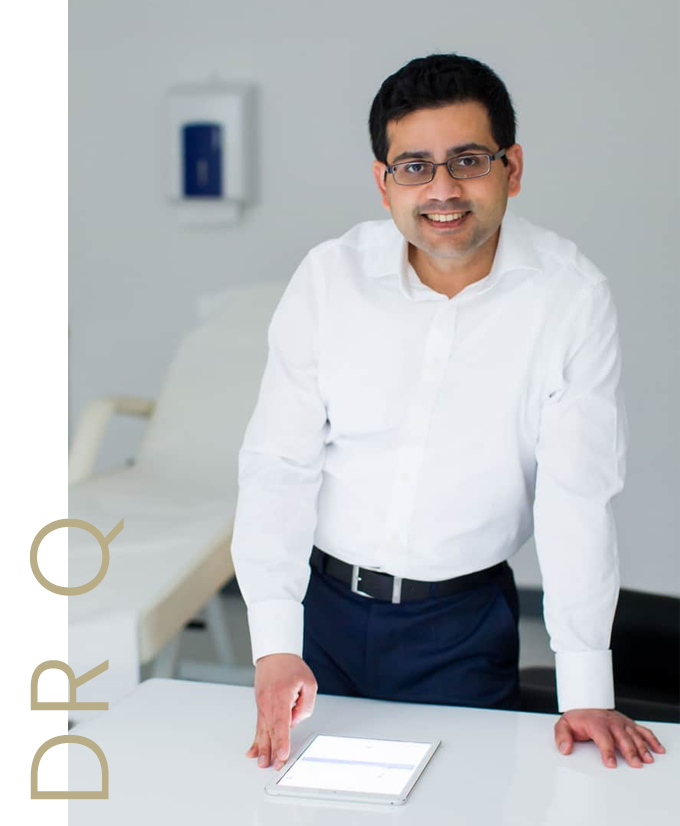
Dr Usman Qureshi (Dr Q) is a leading expert in aesthetic medicine with a 22 year career and a background spanning general practice, including A&E, and 12 years specialising in cosmetic procedures. A University of Glasgow graduate of 2002, he is the innovator behind the signature Q Lift, has performed over 20,000 procedures, and is an international speaker and trainer whose work has featured in Glamour and Harpers Bazaar.